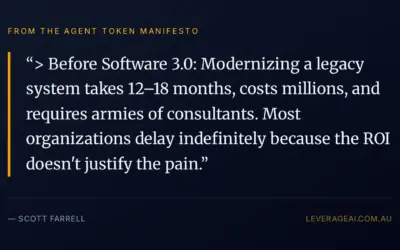
For years, legacy systems survived because the economics protected them.
Legacy systems survived because replacing them was too expensive. When agents collapse that cost, the real constraint—and the real excuse—will be leadership judgement.
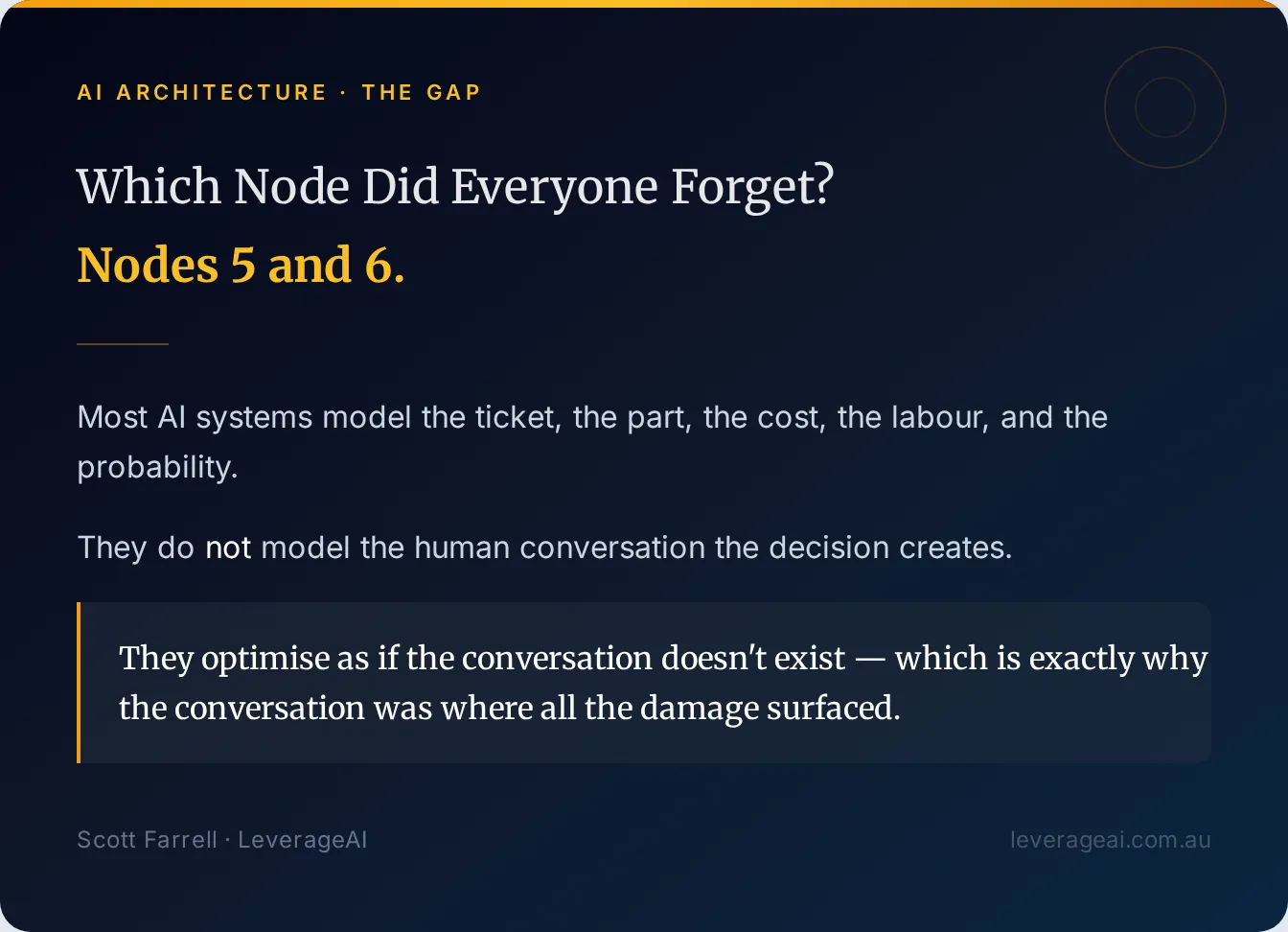
The AI decision may happen in the back office. The trust gets spent at the counter. If you govern the transaction but not the conversation it creates, your frontline staff become the shock absorbers.
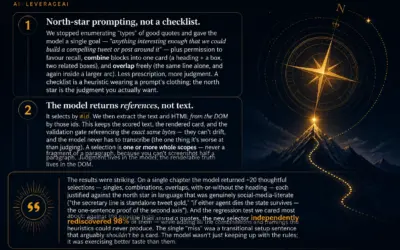
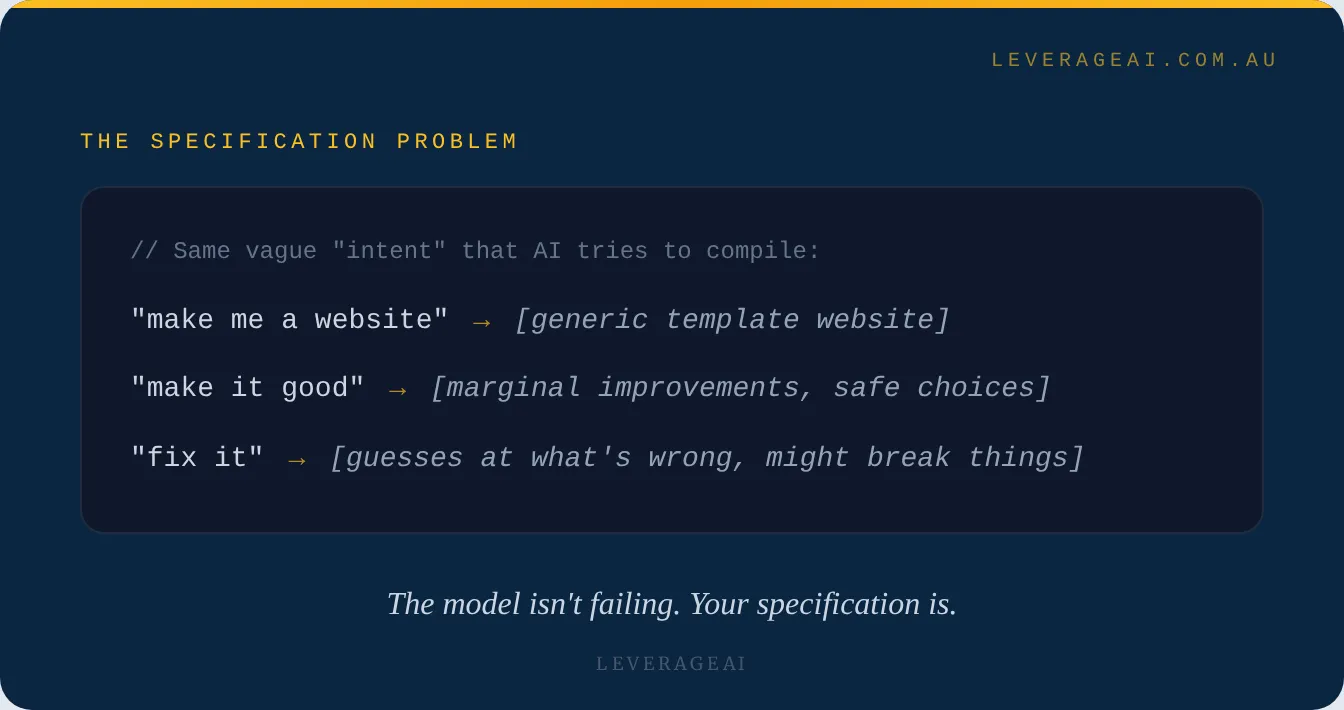
AI does not remove the need for thinking. It punishes vague thinking faster — turning unclear intent into fluent, plausible failure.
Most fragile AI systems put rules where judgment belongs and trust where architecture should be. The real craft isn’t prompt engineering. It’s boundary design.
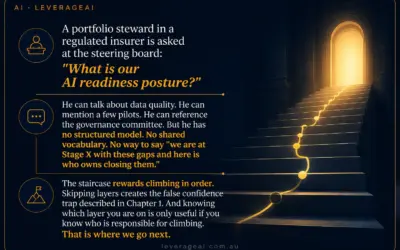
Most AI pilots do not die in the sandbox. They die in the gaps between readiness layers that everyone influences—and nobody truly owns.
Your agent logs may tell you exactly what happened. But when a board, regulator, or insurer asks who authorised it, will you have evidence — or just a story your system wrote about itself?
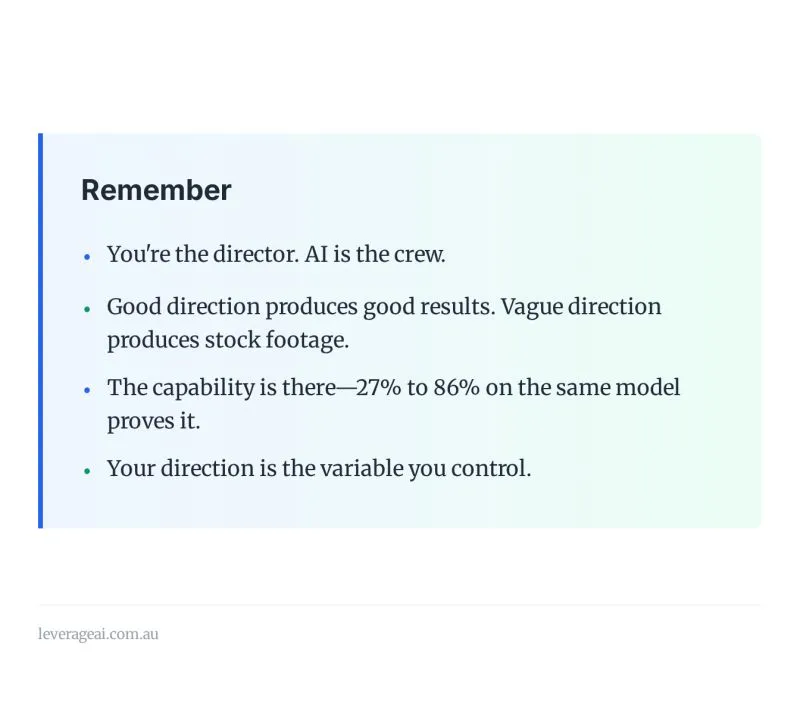
The capability was there the whole time. The gap between a disappointing answer and a remarkable one wasn’t intelligence. It was direction.
AI can now run the thought experiment. The edge belongs to those who know which premise is worth following — and recognise the right answer when it comes back.
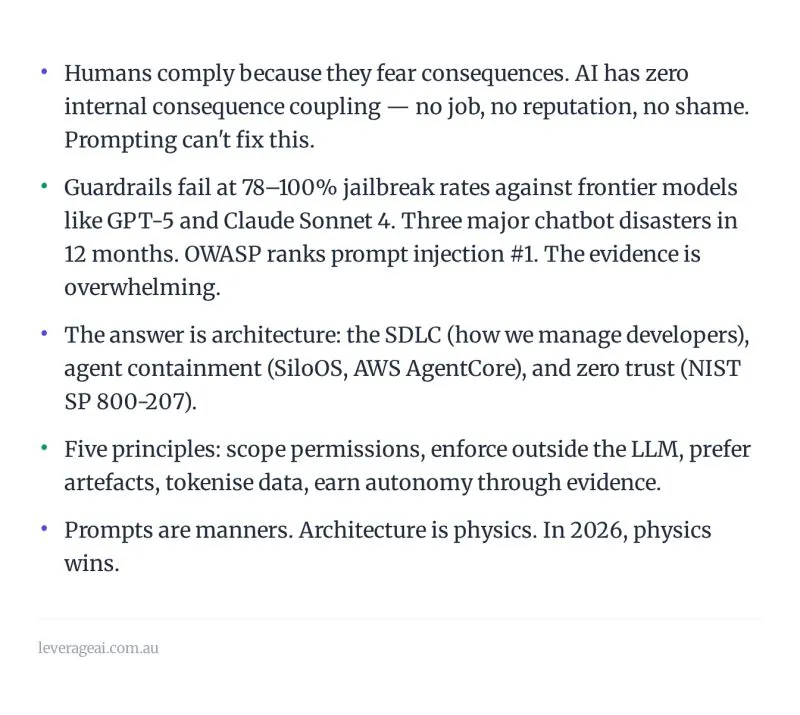
You can’t fire an AI. So stop trying to motivate it with better prompts—and build an architecture that makes trust irrelevant.
The failure wasn’t that the AI was wrong. It was that the guess arrived with no receipt — leaving the human to clean up after an invisible foreman.