
The most flattering line in your description of someone's work is usually the false one.
Take a constructed example: a nurse doing home visits. You want to write an accurate account of what she actually brings.
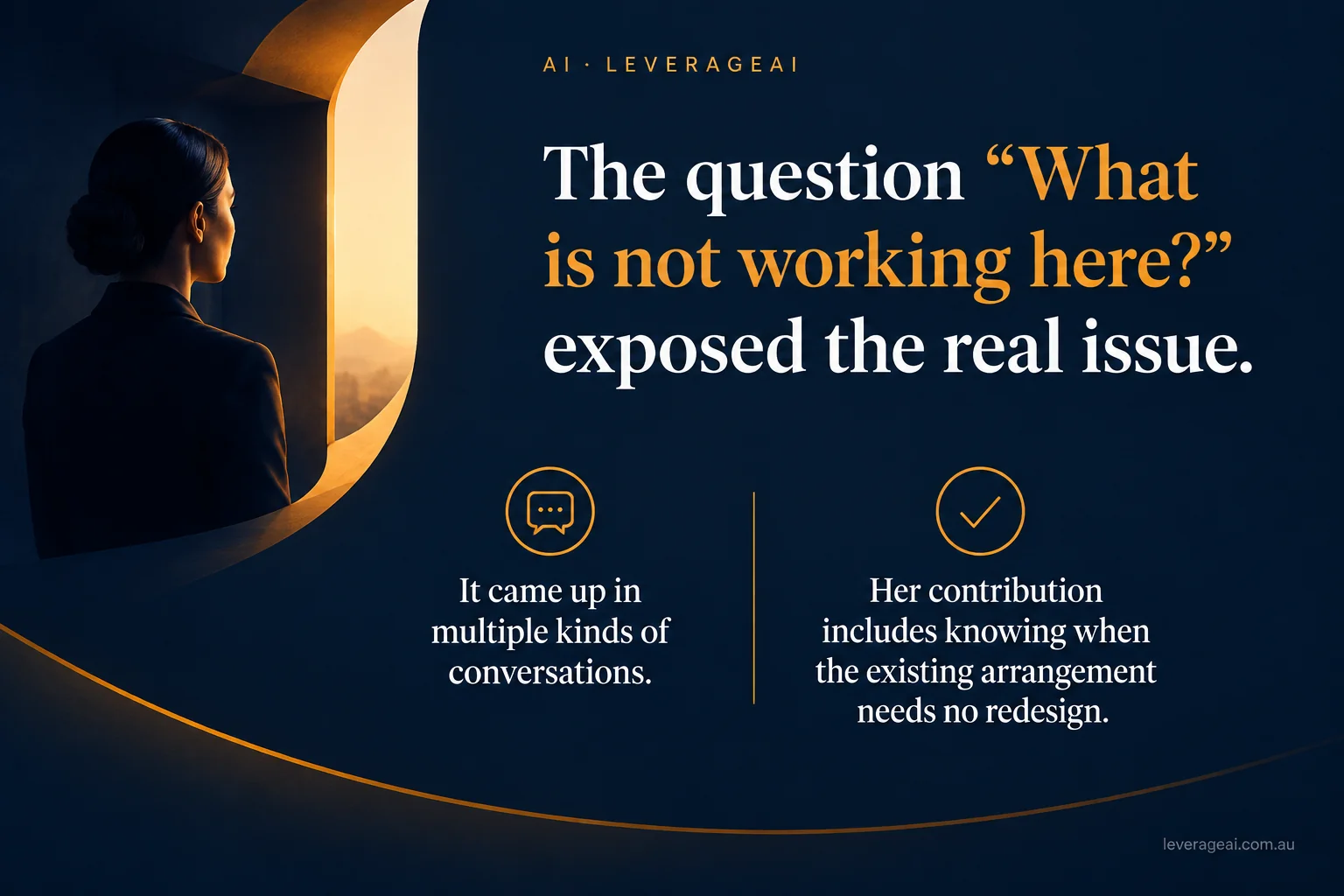
Three episodes. In the first, she asks a family to walk her through tomorrow's care instructions — out loud, step by step. The walkthrough exposes that nobody has been assigned to actually do them. The instructions were clear. The responsibility was never allocated. In the second, a colleague asks her how to explain a set of steps to a household, and she works it through with him. In the third, she visits, sees the family has already built a routine that works, and changes nothing.
Now write it up. The tempting sentence is "she coordinates care across the system." It sounds significant. It would survive any interview. It is also not supported by three episodes of self-reported detail, and it hands her a claim she cannot defend if anyone pushes.
The narrower sentence is better: she notices whether instructions can actually work inside a particular household. That covers the walkthrough. It covers the conversation with the colleague. And it covers the third visit, which is the one that matters most, because deciding an arrangement needs no intervention is the same judgement as spotting the one that will fail. An account that only records what someone changed would score that visit as a nothing.
This is the uncomfortable part. Making a description of someone's expertise more accurate usually means deleting its most impressive claim. It feels like a demotion. It isn't. The narrow sentence is the one that holds up when it's tested; the grand one collapses the first time someone asks for an example.
The same instinct runs through how organisations describe their own capability. Wide claims that feel good in the deck. No specific incident underneath them. Nothing that survives a question.
Precision isn't modesty. It's the only version of the claim you can actually stand behind.
Discover more from Leverage AI for your business
Subscribe to get the latest posts sent to your email.