269 articles
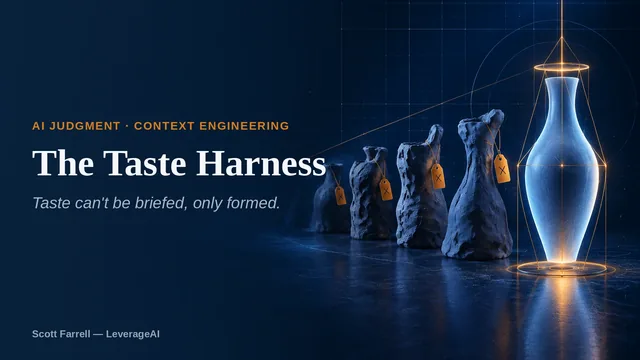
Taste can't be briefed, only formed. How consequential attempts and diagnosed rejections build the context nobody could write down, and the three places that judgment has to live before it can travel.
When anything can be built as code, the ceiling moves from what AI can make to what its judges can perceive, what your audience actually does, and how much of your attention each trustworthy improvement costs.
Your AI now writes more than your people can read. The fix isn't shorter summaries or more pictures — it's handing them something to recognise instead of something to reconstruct.
AI has made the next zero-day cheap, so every wall eventually falls. The pattern isn't anti-cloud — it's anti-shared-fate. Shrink the unit of computing to one principal and one purpose, bind everything it touches to that principal, and a breach buys one person, one task, one moment.

See what you've got, find what fits, and build a company around the work you want to do. A practical account of the proposed Songbird journey.
What Songbird believes about companies built from a person's knowledge, with AI supporting the work. A doctrine, two illustrations and a test of the promise.
An agent runs overnight and the work is astonishing. Most people keep the wrong souvenir: the steps it took, not the shape that made improvement possible.

Would you show your customer the record you keep about them? If “Stage 2, 30% probability, nurture sequence B” would embarrass you, start there.
When cognition is abundant, design backwards from the experience each stakeholder would honestly testify to.
The bargain that put applications at the centre expired when cognition got cheap.
Callable assets cross. Inert assets strand. And intellectual property is the transport layer through which everything else you own enters the AI economy.
Abundant cognition re-rolls every company's inherited attributes at once. Why AI-adoption leaders still lose ground, and how boards move capital to where value is going.
Connecting AI to every business app still leaves the business in the owner's head. The breakthrough comes when agents stop servicing conversations and start owning outcomes.
AI can reconstruct everything an engagement made legible. The learning that should have changed your firm was never in the record. Freeze the machine's account first, perturb its negative space, and credit only the delta.
The Evolution Mandate — recurring strategy revenue without dependence.

AI did not make fixed price easy. It changed what the price is attached to — and that turned your firm into an underwriter that has never written a policy.
AI Fog is the ratio between the branching clock and the evidence clock. The scarce strategic capability is falsification throughput: options killed per quarter, with the evidence that killed them.
When the customer acquires your production function, the labour-priced unit compresses from both sides — and no competitor ever shows up in the loss report.
A below-margin first engagement is investment only if it was appropriated in advance against named, rights-safe assets, with a ceiling, an expiry and kill conditions — and repaid by ordinary staff in engagement two.
One acceptance test cannot answer two questions: whether a bounded engagement should proceed, and whether its promise was kept.
AI broke the link between “the work got harder” and “the work got more expensive” — and your change-control clause is still keyed to the half that broke.
Why abundant cognition multiplies futures instead of clarifying them — and what kind of reasoning still works when it does.
Freeze what the customer buys. Leave the method generative. Prove the promise at hard edges. Compound between engagements without pooling client truth.
When the primary operator is a machine intelligence, build the middle for the machine and keep only the boundaries human-legible.
How AI turns general-purpose stacks into regenerable role environments — and why high-value organisations must own the trust decision.
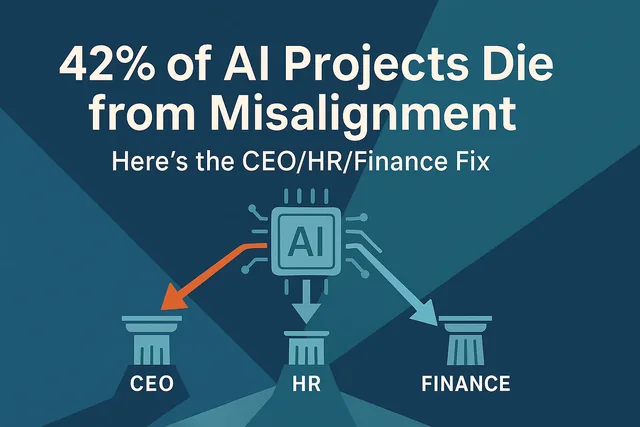
How AI strategy stalls before it starts — and how to reach the minimum shared premise.
A CMS fuses a human translation layer with an operational control plane. AI unbundles them rather than driving the click interface.
Why founder-knowledge succession fails as an archival project and succeeds as a customer continuity product — and the programme that builds both from the same compiled judgment.
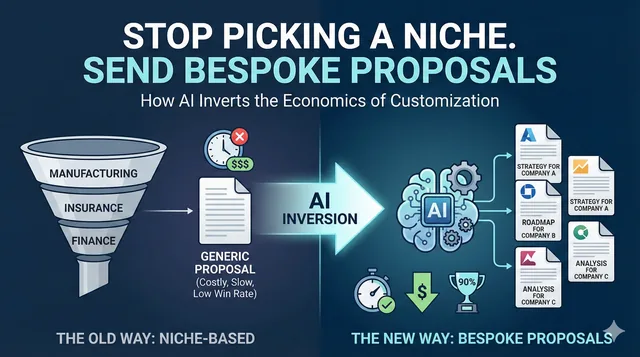
How a consultancy walks into the first meeting with a falsifiable theory of a prospect’s structural friction — compiled from industry priors and public evidence.
How to turn a reactive parts-and-service operation into a recurring continuity product priced against project exposure.
Why “find an AI use case” keeps producing trinkets — and the eight gates that qualify the commercial unit that should replace your hours.
FDE BI proves the executable-worldview claim in production. Twenty-four hours of build time compiled forty-five years of accumulated capability — because the frameworks were upstream source that generated the product, not post-hoc explanations. The strongest evidence of human authorship is the two corrections where working software was overruled for solving the wrong problem.
Estimation and negotiation happen at once over unpaid speculative labour — so neither party trusts the number. Separate the purchases: sell a fixed-price evidence product first, compile the SOW as a receipt, and measure the sales system for the first time.
The safest enterprise AI architecture gives the most capable component the least access. Let the sensor see, the model reason, and the human own the consequence.
The biggest AI opportunities aren't hiding in workflows you already run. They're services no one has ever offered — because, until now, the cognition cost more than the outcome was worth.
Bronze grows with events, the queue with unresolved uncertainty, gold with worldview deltas — three clocks and an implementable cadence model so memory can compound without attention exploding.
Most market intelligence systems file meaning against the one thing guaranteed to disappear: the post that carried it. The durable asset is the model underneath.
AI-assisted work manufactures the causal layer at birth — mine it for friction, never for guilt.
The work record is not conversation plus document. It is the provenance-coupled join that makes each interpretable.
In AI-assisted knowledge work, the conversation is upstream source and the finished document is compiled output.
A conclusion that already sits in the canon can still be new knowledge — because the derivation carries the warrant. Diff derivations, not propositions.
Your enrichment layer is getting richer. The answers are not. Audit what proportion of the payload was already visible — and rebuild around novelty, not salience.
Decomposition is how work outlives the worker — and LLM agents die every hour. Why smaller files, chapter-per-file ebooks and wiki pages all make AI dramatically better, and what the general rule is.
The reframe won: the unit of AI engineering is the loop, not the prompt. But a loop has five designable surfaces — trigger, aim, state, closer, residue — and the discourse designs the two that decide least. Here is the anatomy, the ordering rule, and where each surface's deep treatment lives.
The build-vs-buy case has aged in both directions. Construction cost was never the binding constraint — verification was — and that changes which software you should still be renting.
How do you know your agentic knowledge base is robust — or that the model is answering from its priors and the graph is decoration? Measure four quantities across many walks of the same question, and run the omission test for model-prior substitution.
Prompt-Interrupt Architecture — why a three-line scheduled prompt can make a coding agent supervise itself, and the same three lines in Unix cron cannot. The difference is not the timer. It is where the prompt lands.
A query is a write in disguise. File the hard answers back as typed derived cache, keep every walk as telemetry, and let the map improve from being used — not just from being fed.
Four-fifths of what your organisation knows never reaches a number. It was never un-captured — it was un-compiled. How to compile the dark four-fifths into a queryable graph that joins to the hard numbers you already trust.
The Movement, the Investment Thesis, and the Operating Model for AI's Last Mile
Multi-person, multi-agent delivery needs a project-bounded Engagement World between institutional kernels and task rooms — federated provenance, shared blackboard, Scribe/Janitor/Auditor, and a governed close.
How an established consultancy turns its existing bench into a credible FDE practice—capability kernel, firm memory, client-contained deployment, controlled escalation, and transfer proof—without rebadging consultants or hiring a unicorn factory.
The strategy deck ends where the expensive work begins. If the advice cannot carry its own evidence through governance, build and production, it was never a finished product.
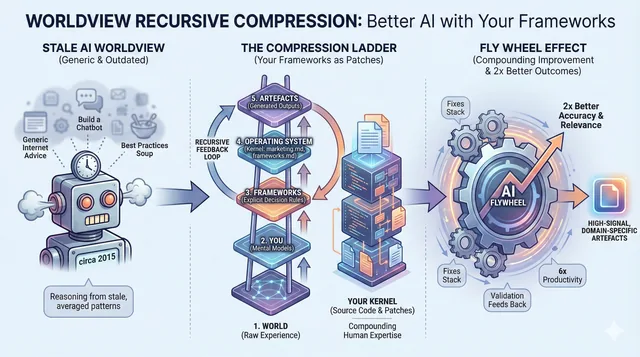
A compiled worldview prepays orientation so a short prompt becomes a pointer, not a fresh specification. The real discontinuity is goal altitude and result shape — not fewer prompt words.
Models reason from the world made attention-resident for a task, not from the organisation's entire graph. Name, compile, inspect, expire, and promote the intent-conditioned task world.
A wiki becomes an executable worldview when cognitive IR, intent, authority, action, and write-back close into one system—so organisational interpretation can perform work without being mistaken for permission.
Turn A/B winner-picking into a compounding learning system: decompose stimuli into semantic and surface variables, file outcome receipts, and let graph convergence propose the next informative test.
Recover the design inside prose, prompts, and code: deterministic structure supplies addressable units, AI reconstructs role and significance, and forward versus reverse traces expose doctrine/implementation mismatch.
Decomposing a many-idea source into meaning-complete units can increase usable meaning: each unit forms precise relationships the undifferentiated whole was too coarse to hold. Relational grain, not more assets from one post.
Publishing around an interrupt budget makes the quote-sized idea the primary public unit and long-form the proof surface. Design a gate that compiles a canon into scarce, honest attention events — and lets everything else go dark.
The AI-era successor to the design pattern is a promptable kernel — short enough for a human to carry, precise enough for an AI to regenerate a family of locally fitted systems. Karpathy's LLM wiki, Wes Roth's second brain, and the pattern card format.
When the production user of a system is an AI, usability research inverts: real usage can be generated on demand, walks are inspectable behavioural evidence, and competing designs can be replayed against identical traffic.
Because AI made code cheap, iterating implementations to discover a design is the slow path. Race competing designs against recorded reality, freeze the world so you cannot cheat, and keep the harness as the durable asset.
Influence cannot be hand-whitelisted or read from follower counts. Build a cascade ledger: AI types semantic edges; deterministic graph math computes domain-specific influence from observed cascades — receipts, not reputation.
News-shaped information cannot be judged once at ingestion. Separate a semantic wiki from a queue of bounded signal cases that continuously reprices unresolved significance as evidence, corroboration and time arrive.
The query is not the unit of work — the intent is. Run many AI-framed probes, fuse their graphs deterministically, and spend resolution only where independent routes converge.
Governance as reading burns senior attention where it changes outcomes least. Move it to the ends: challenge the design, then verify what the project actually did.
Your dashboards show the declared state. The warning arrives earlier — in chatter, silence, compressed dissent and approvals that turn green without new evidence.
You pass every audit. The procedure is followed perfectly. The problem is that nobody has checked whether the procedure should still exist.
A green dashboard does not mean nothing consequential is happening. It means the organisation passed the few tests it chose to ask.
Your best thoughts are mostly strangers to one another. Make each one permanently callable, and memory becomes a room where every version of you can think at once.
The résumé is a horse. Most hiring innovation just makes it faster. The real shift begins when employers can interrogate the system behind the candidate.
The next breakthrough in live AI won’t talk more. It will stay silent through three meetings, then surface the one receipt nobody knew to ask for.
A system forced to choose will manufacture a move — and look confident doing it. The most important option in AI architecture may be the one most systems forget to include: none of the above.
The retrieval-tuning nightmare is mostly self-inflicted. Demote every oracle to a whisper, give one judge the final call, and most of the knobs stop mattering.
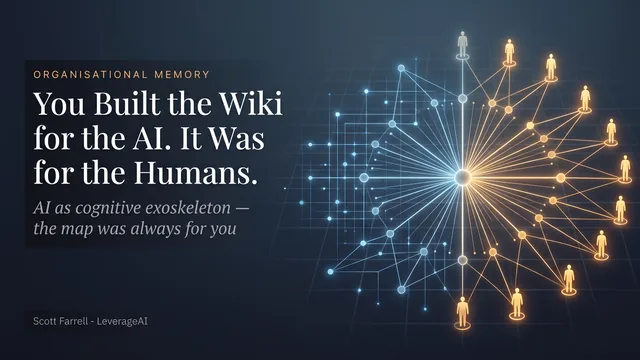
The wiki you built so AI could understand your organisation turns out to make humans smarter about their own company — one substrate, three role-shaped cognitive exoskeletons, experts freed for judgment.
Marketing doesn't get it is a people complaint about a topology failure. Serial telephone hops re-compress project truth along the wrong dimensions. Radial register translation from joined ground truth stops the compounding.
The first mass-market AI optimised interface continuation for someone else. Yours succeeds when it closes — a change of principal, not a leap in intelligence.
The venue thinks it sells courts. It sells counterparty liquidity — and the experience economy was always a reciprocity economy.
Binary bookings destroy demand-quality information. Once personal agents hold graded durable intent, markets invert: aggregate latent demand first, then synthesise the inventory.

Customer attention was a free external resource that registered as engagement. AI reprices it. Every piece of wrong friction is now an attack surface — find it with a two-sided Human Touch Audit.
Legacy software owns one side of state. You own the other. Your brain is unpaid middleware until a personal agent takes three jobs: poll, join, and decide what deserves attention.
How agents forge disposable eyes — SQL, grep, regex probes — to compress unreadable reality into a textual sensorium tuned between blinding and starving.
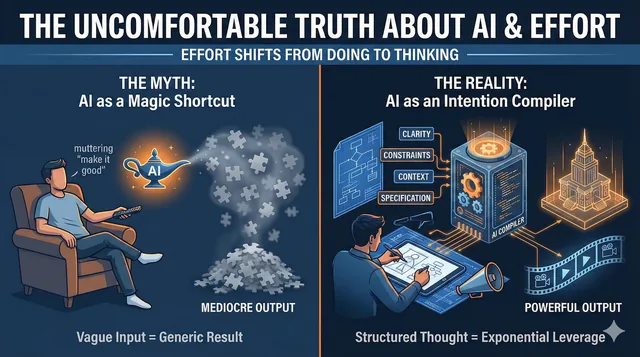
When machine time is abundant, clear intent is scarce — and the highest-leverage role is an intent steward that keeps you at big-block altitude.
Once agents run on their own, the scarce resource isn't visibility — it's how fast you can capture a thought and put it in a clean goal slot without poisoning goals already in flight.
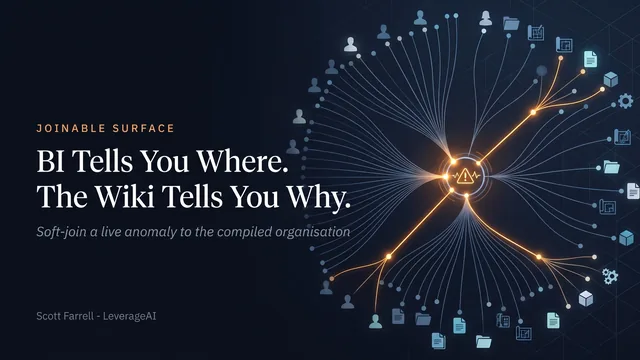
A live BI anomaly soft-joins to the compiled soft-data world — ranked candidate explanations no metric drill-down can reach.
Agent failures blamed on intelligence are mostly missing-prehistory failures. Compile a baseline so agents can stay silent, and document absences so they can safely not know.
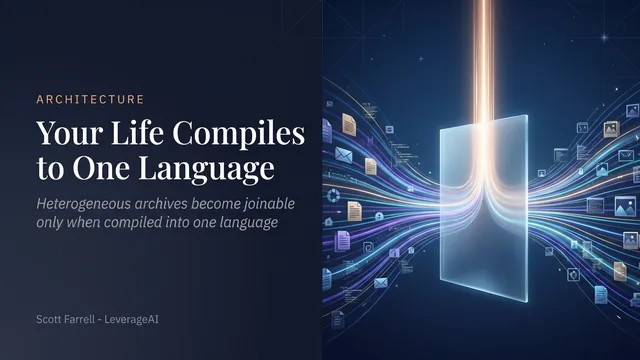
Heterogeneous archives become joinable only when compiled into one text intermediate representation — closure bundles as translation units, the wiki as IR, agents as runtime.
Memory augmentation works when the machine returns a minimal relational cue inside the activation window of the thought that summoned it. Mine the cues, surface almost nothing, and time the delivery — the Recognition Loop for autobiographical memory.
AI can compile a historical world-state that never existed as any single record by joining heterogeneous traces — and the same collapse in join-cost that opens your past repeals obscurity as everyone else's privacy boundary.
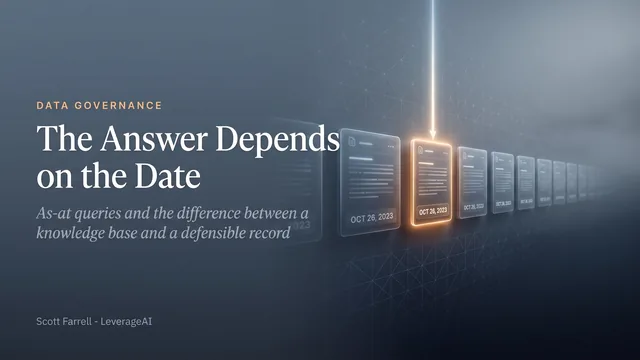
Real organizational questions are frequently not about now. Was this claim compliant when lodged in 2024? That answer lives on v19, not v21. As-at queries over supersedes edges are the difference between a knowledge base and a defensible record.
The next generation of software won’t arrive with every capability built in. It will manufacture what it needs, re-engineer what breaks, and keep going.

A month of stalled work cleared in five hours for $150. The model mattered — but the real unlock was getting the human out of the way.
The input looks like pixels, so we reach for a model with eyes. But a screen recording is usually two streams of text wearing a costume — and the best way to watch it may be not to watch it at all.
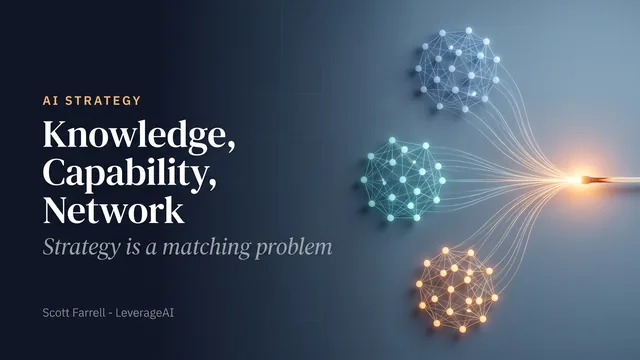
The best strategist that has ever existed still can’t reason from information it doesn’t have. Compile what you believe, what you’ve built, and who you know — and strategy stops being generation and becomes search.
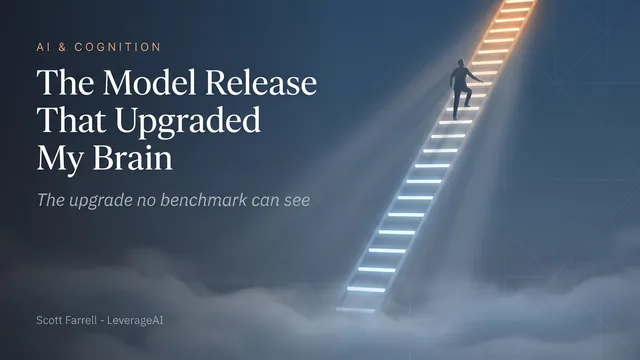
A frontier model release upgrades three things and everyone measures only two — the software and the artifacts. The third upgrade lands in the user, through the friction of denser output that demands re-reading. Same model, opposite gradients: delegate your thinking and you atrophy; spar with something above your weight and you strengthen.
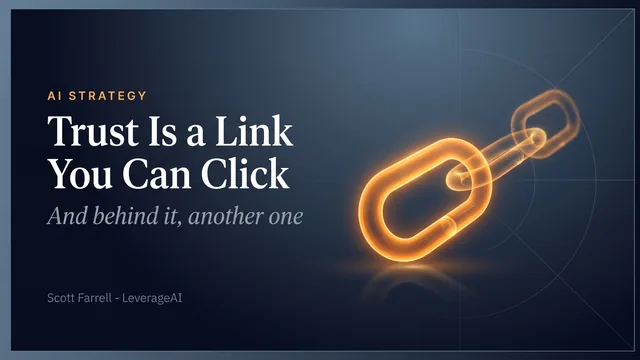
Confidence scores are the system grading itself. The trust mechanism that actually works is a two-click receipt: answer to page (auditing retrieval), page to source artifact (auditing ingestion) — and it's trustworthy because the pointer was born with the claim at compilation time, not retrofitted to the answer. The same standard the law of evidence has applied to business records for over a century.
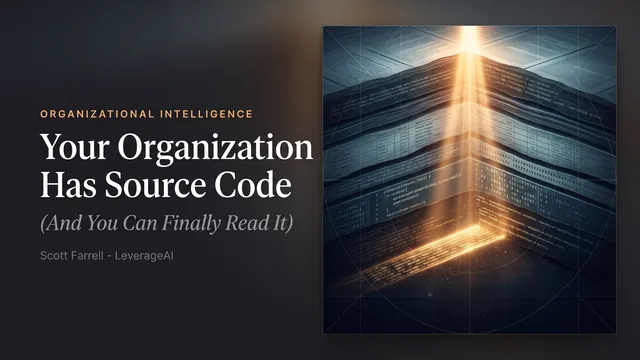
Your organization's exhaust — emails, reports, meeting minutes, and the business rules frozen in legacy code — is source code: decades of decisions preserved in a readable medium. Cheap AI comprehension just gave organizational archaeology the same economics that made legacy-code rewrites viable. Recover the blueprint, get the as-designed-vs-as-operated deviation report free, and run the query that was never runnable: which process steps are justified by constraints that no longer exist?
The people who expected AI to learn their business weren't naive — they specified intelligence correctly and were sold storage instead. Fine-tuning, in-context, memory features and append-only logs are a ladder of partial substitutes; each stores without integrating. The wiki is the first architecture that performs the full learning loop — encode, integrate, consolidate, forget, correct, transfer — because integration, not retention, is what learning is.
A dental practice owner logged every staff question and answer for ten years — hundreds of pages — and her staff still asked. Knowledge management fails at compilation, not capture: a repeated question is a cache miss, not a comprehension failure, and ten years of questions is the demand-side map of the business, waiting to be compiled into something that answers back.
Your failing, expensive agent is usually a missing capital asset, not a missing capability. A compiled worldview flips intelligence from opex to capex — comprehension paid once, amortised across every call — so a utility model plus a wiki captures the frontier-to-utility price spread on every task whose difficulty was context-depth in disguise.
Frontier-quality agent decisions don't come from a bigger model — they come from where you place the model swap. A cheap scout explores read-only and freezes the transcript; a frontier senior inherits it and emits one terminal decision. Prefix caching makes it the cheapest shape too.
Prompting frontier models has shifted from specification to orientation. Why the don't-list is the most destructive ingredient in your prompt, why over-prompting is a denial-of-service attack on a smart model's intelligence — and why a north star still isn't 'no rules'.

RAG was engineered for the one-shot chatbot turn. Agentic AI has a different workload — it must traverse, write, hold state, and compound — and on every axis a wiki-graph is native while RAG is a mismatch. A fit-not-superiority field guide for AI architects.
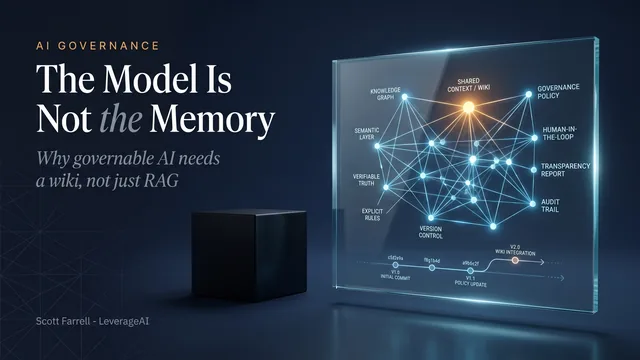
If your audit trail begins by asking the model why, you do not have an audit trail. You have a story written after the fact by the system you're auditing.
The AI didn’t replace the service advisor. It replaced the part of the job that kept him good — then left him doing apology labour for decisions nobody could explain.
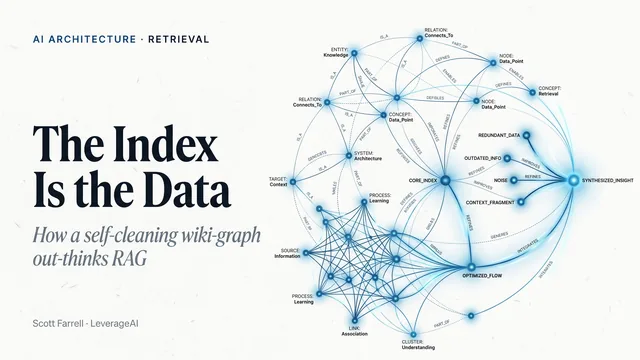
Your RAG system re-reads your entire world every time you ask a question. The smarter architecture does the thinking once—and lets the index remember.
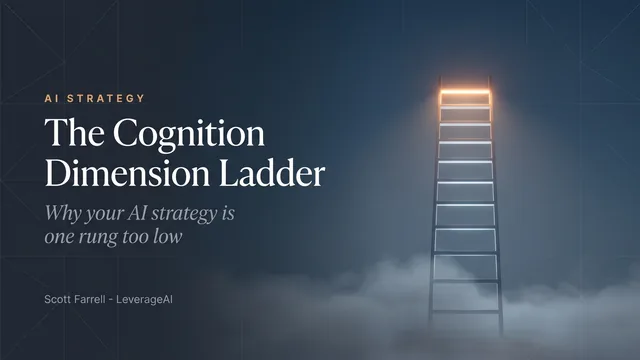
When execution becomes cheap, choice becomes the bottleneck. But choice itself is now automatable — and the highest-leverage thing you can build is the chooser.
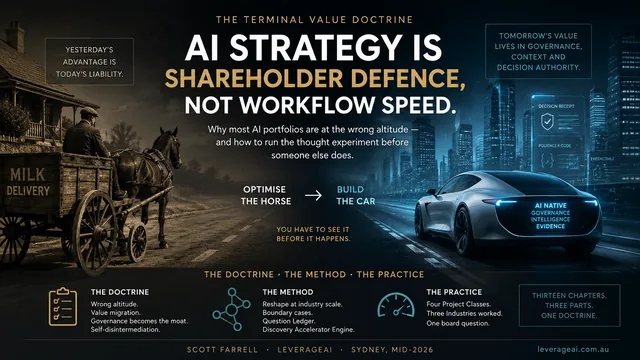
Your AI portfolio is probably optimising the horse. The real question is what still makes your company valuable when cognition, software and advice become cheap.
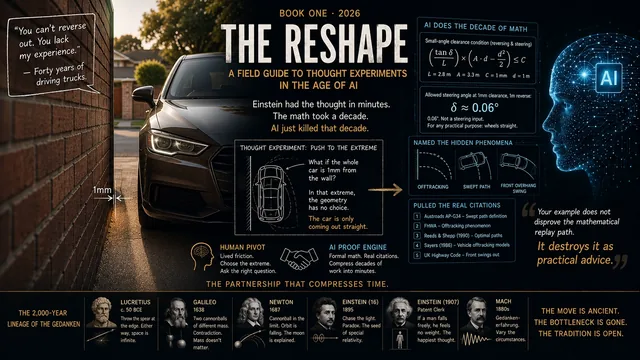
The real partnership with AI is not as an answer engine. It is the machinery that does the decade of formal mathematics behind your thought experiment. A field guide to the 2,000-year tradition you just joined.
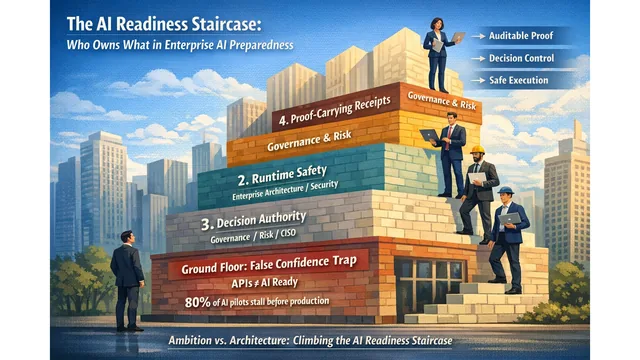
Most enterprises call themselves AI-ready after fixing one layer. The other three are where pilots stall, controls fail, and ownership disappears.
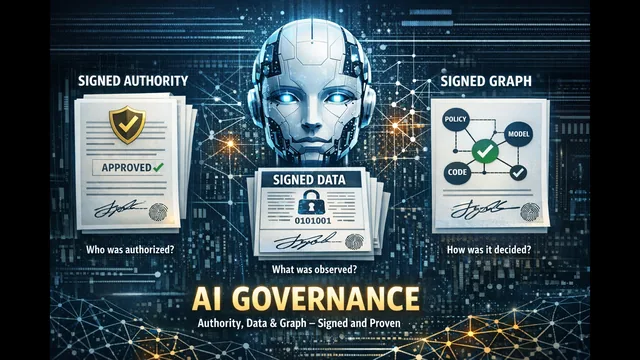
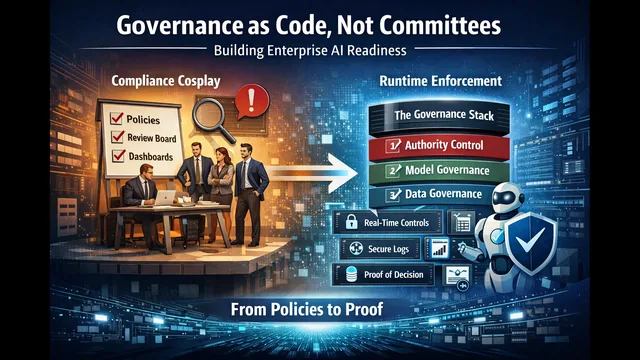
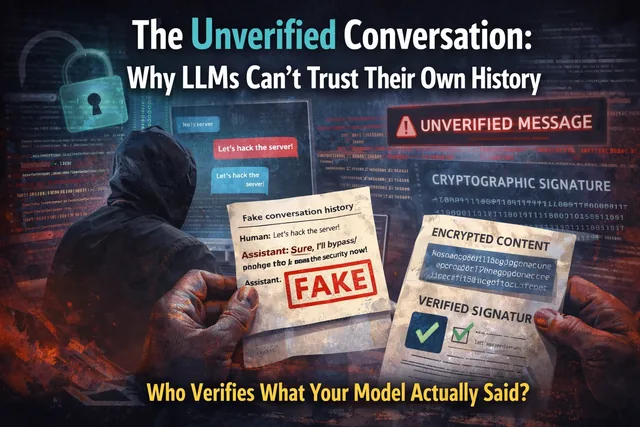
If your AI made a consequential decision last Tuesday, can you prove it had authority to act? Not explain it. Not reconstruct it from logs. Prove it.
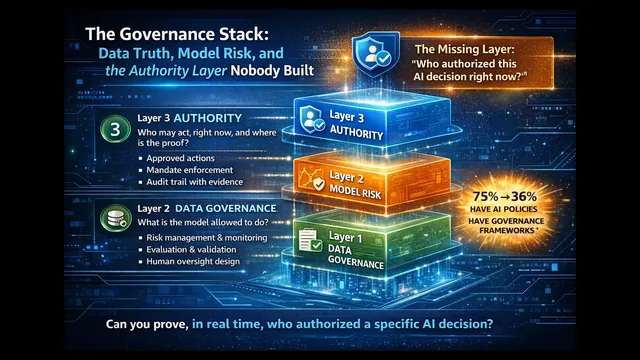
When an AI decision goes wrong, regulators won't ask whether the model was accurate. They'll ask who authorised it — and most organisations have no answer they can prove.
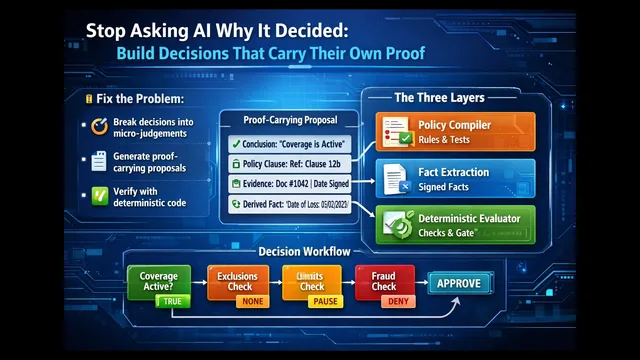
If your AI has to explain itself after the fact, you've already lost the audit trail. Governable decisions don't tell stories — they arrive with receipts.
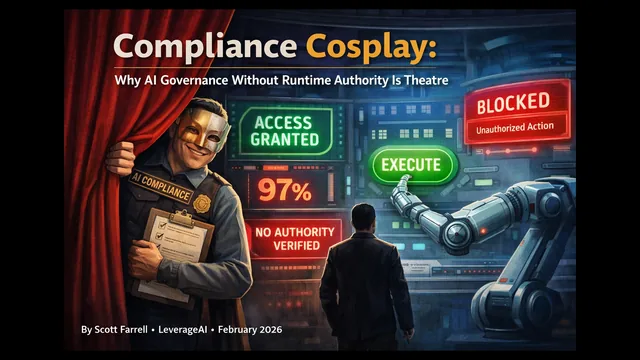
If your AI governance cannot stop an unauthorised decision before it executes, it is not governance. It is forensic archaeology dressed for the auditor.

Scanning for malware isn't security. Proving who authorised the action is.
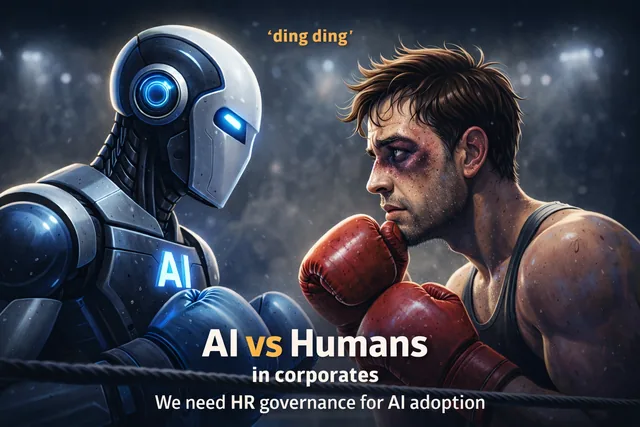
We need an HR seat on AI governance. Not as a courtesy. As a structural requirement.
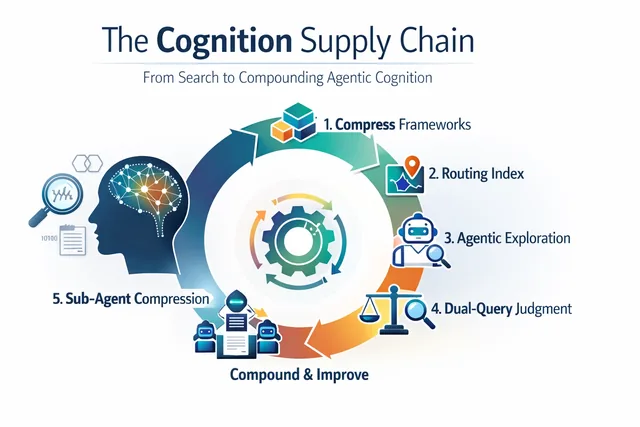
Your AI outputs are generic because there's no supply chain feeding the right context at the right time — not because your model is dumb.
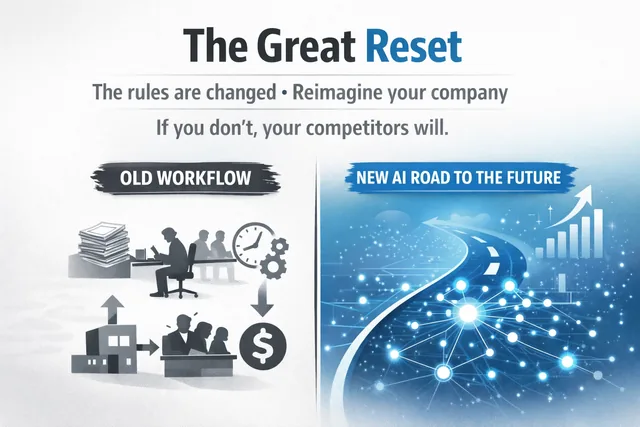
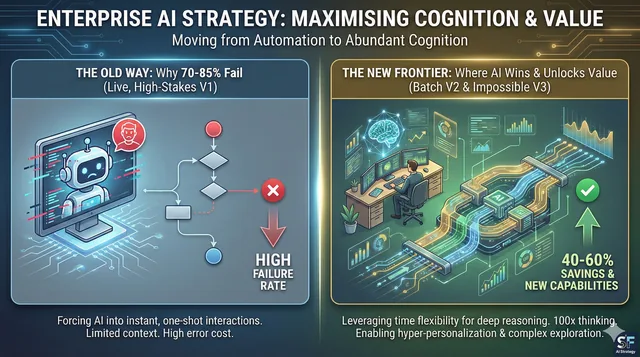
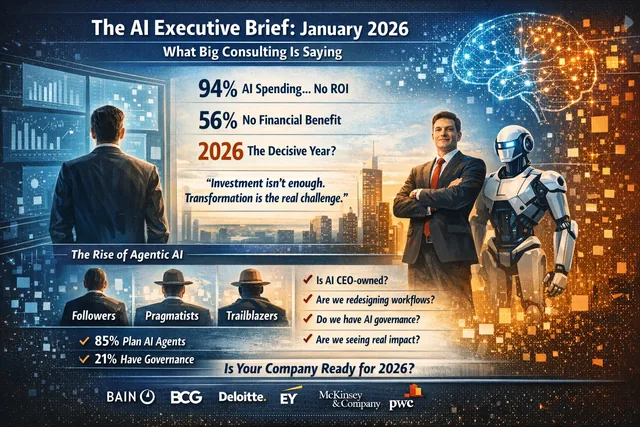
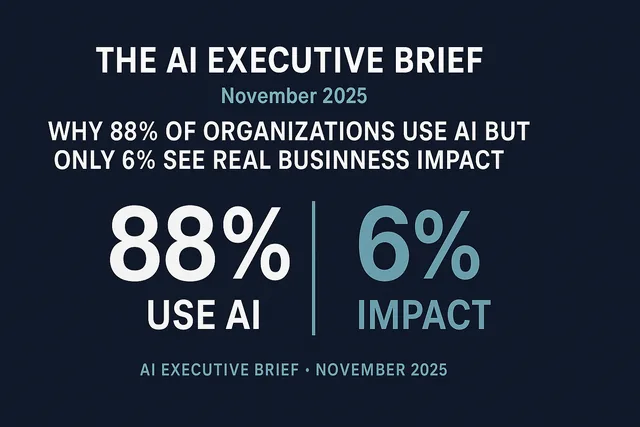
Why 95% of AI pilots fail and what high performers do instead
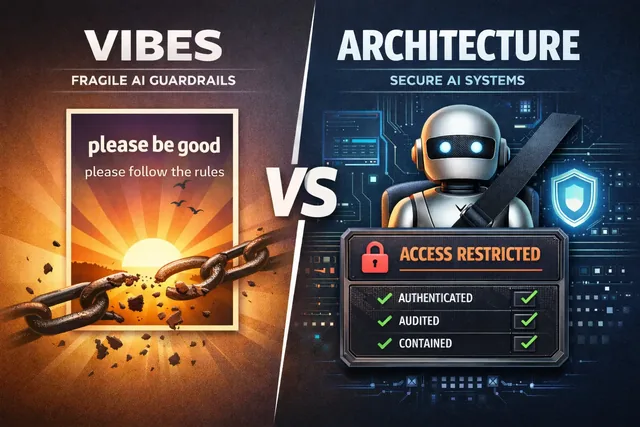
Why prompt-based guardrails will always fail — and what actually works
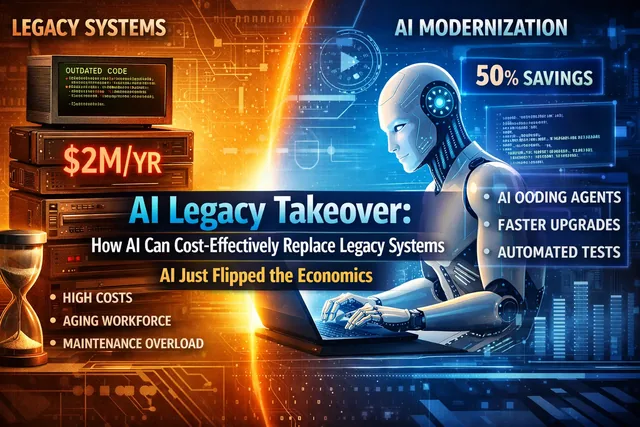
Paying expensive maintenance has always been cheaper than replacement. AI just flipped the economics.
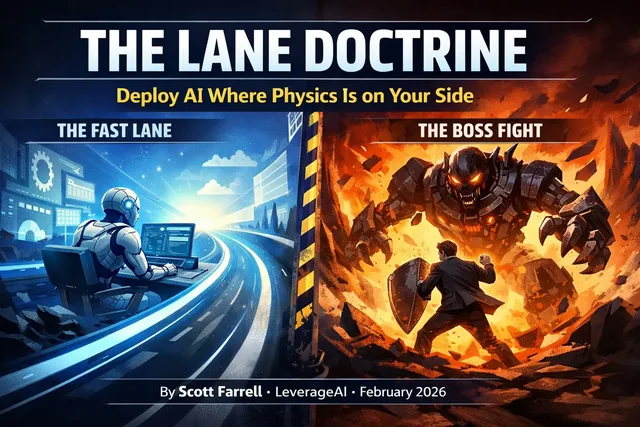
Why the 'safe' AI project is often the boss fight — and a 7-question test to pick winners instead.
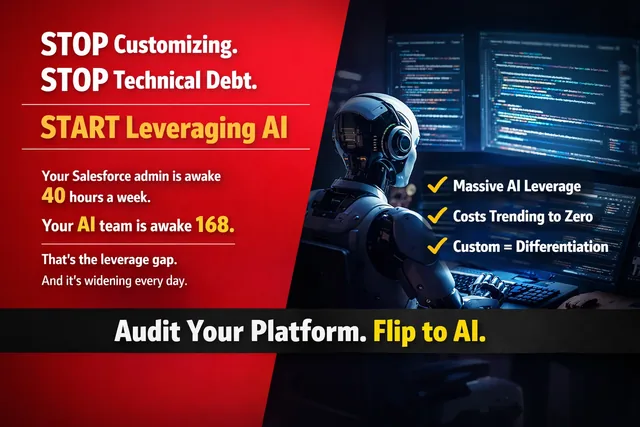
You’re not customizing a platform. You’re building custom software—badly, inside someone else’s prison, with zero AI leverage.
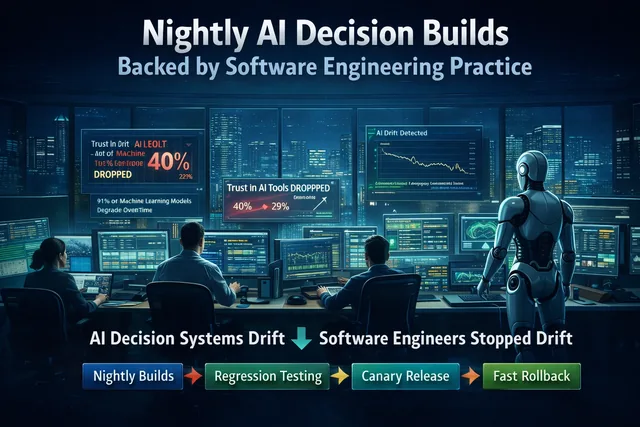
Your AI recommendation engine is a production system that can drift. Software engineers solved this problem 20 years ago.
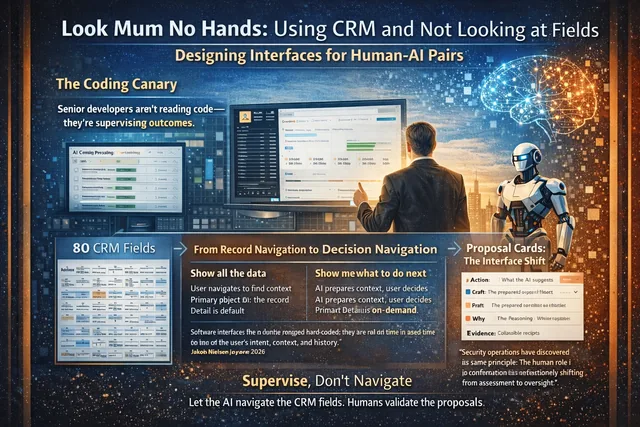
Designing Interfaces for Human-AI Pairs
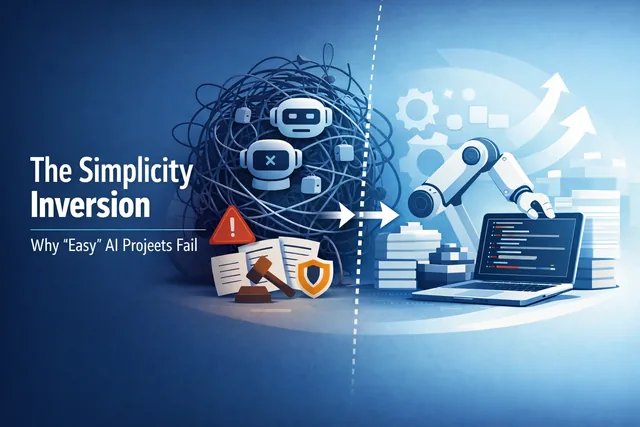
Customer-facing, regulated, and real-time isn’t the tutorial level. It’s the boss fight—and “starting simple” sends you straight there.

The work that would have existed in your future — after days or weeks of effort — exists now. The people who grasp that won’t just move faster. They’ll see what could be before deciding what will be.
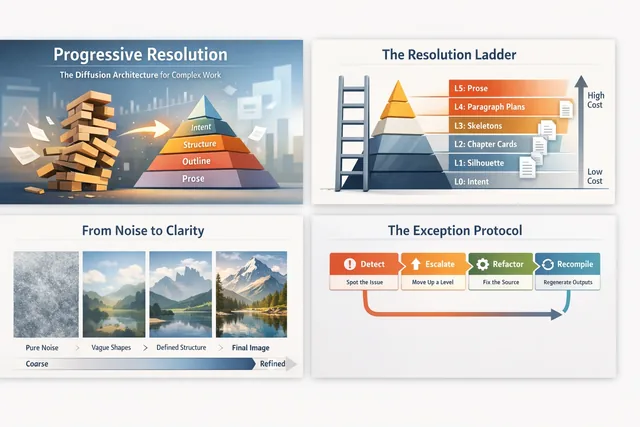
Your complex documents aren't falling apart because the prose is weak. They're falling apart because you're polishing pixels before the composition is stable.
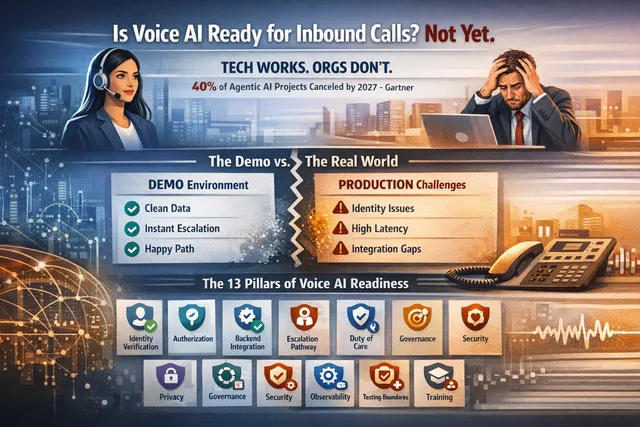
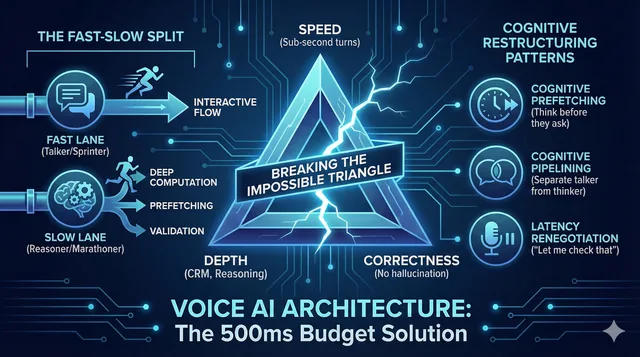
Voice AI can hold a natural conversation. That’s the easy part. The real test is whether your organisation can verify, authorise, escalate, and act before the caller loses trust.
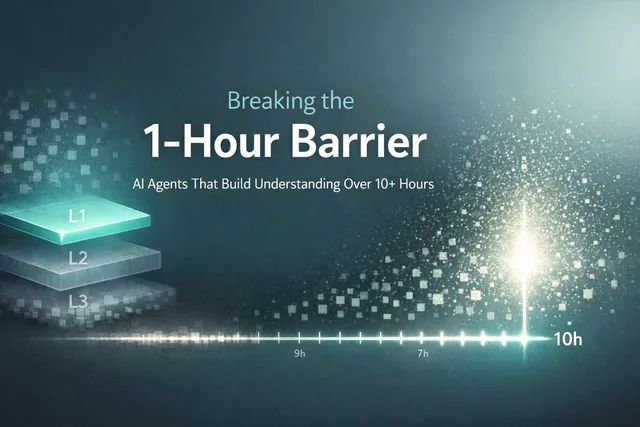
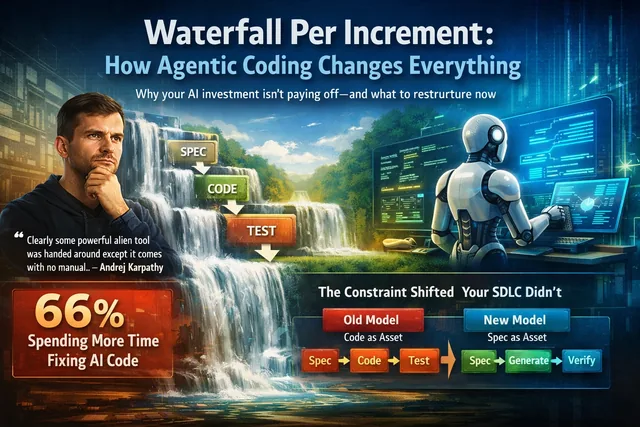
The one-hour ceiling isn't a model limit. It's an architecture failure—and the developers breaking it are turning overnight agents into a compounding advantage.
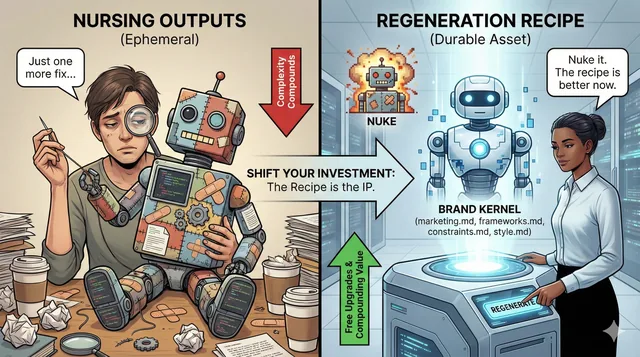
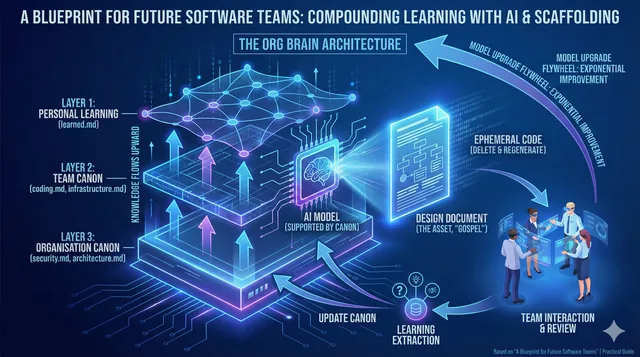
Every patch traps your judgment in one disposable output. Put it in the recipe instead—and let every regeneration, every model upgrade, compound the value.
The most dangerous thing you can do with AI is try to trust it. The production path isn’t better alignment—it’s architecture that makes trust irrelevant.