
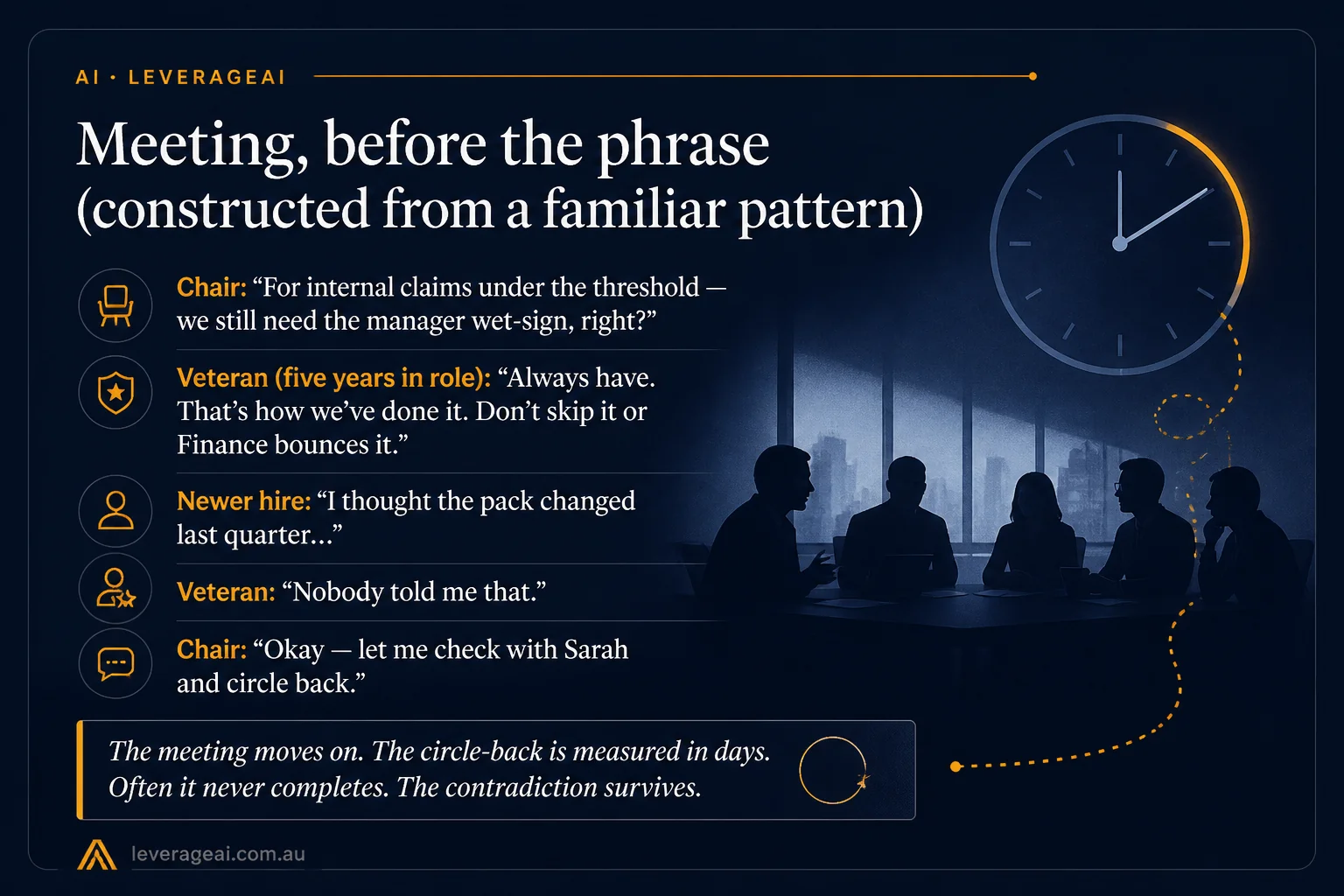
This is how process debt hides.
Not in a broken system.
Not in a dramatic failure.
Not in a dashboard flashing red.
In a room where everyone sounds reasonable.
One person is operating from institutional memory. One person is operating from a newer artefact. The chair is trying to keep the meeting moving. Nobody is malicious. Nobody is incompetent.
But the organisation has just revealed something expensive:
It no longer knows which version of itself is true.
That matters before AI enters the picture. It matters much more after.
Because if you automate this workflow, the contradiction does not disappear. It hardens.
The AI will either follow the outdated habit, the revised policy, the system field, the manager’s preference, or the loudest person in the room. And when it gets blamed, the real issue will be missed: the organisation asked software to execute a process the humans had never actually reconciled.
This is why so many AI pilots look promising in demos and fragile in production.
The model is not always the weak point.
Often, the weak point is the company’s undocumented operating reality.
Before asking “can AI automate this?”, the better question is:
Can we state, with evidence, how this work is supposed to happen now?
Discover more from Leverage AI for your business
Subscribe to get the latest posts sent to your email.