
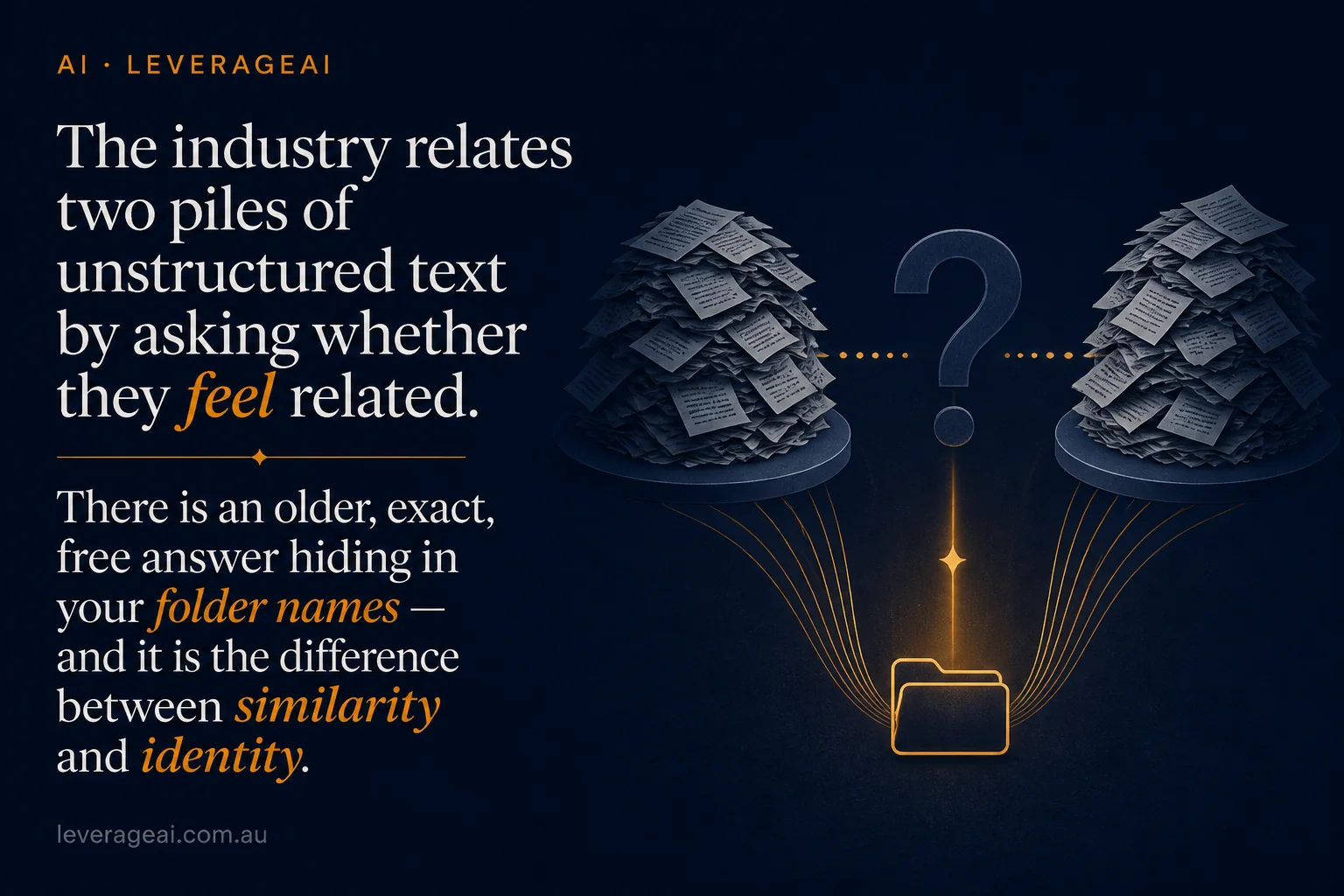
A lot of AI architecture is expensive amnesia.
We behave as if the organisation began the moment we embedded its documents.
So we take emails, tickets, folders, transcripts, PDFs, code, notes — all carrying years of operational identity — and flatten them into semantic mist.
Then we pay a model to guess relationships the old systems already knew.
That is the quiet waste.
Not token cost. Not vector storage. Not another tool subscription.
The waste is epistemic: replacing knowledge with confidence.
A similarity score is useful when the relationship is genuinely fuzzy. But when there is a real key — a folder path, record ID, subject line, purchase order, ticket number, document GUID — using similarity first is not sophistication.
It is forgetting how information systems work.
The best AI systems will not be the ones that throw frontier models at every problem.
They will be the ones that preserve certainty wherever certainty already exists, and spend judgement only where judgement is actually required.
Before you ask the model what relates to what, ask the older question:
What did the business already name?
Discover more from Leverage AI for your business
Subscribe to get the latest posts sent to your email.