
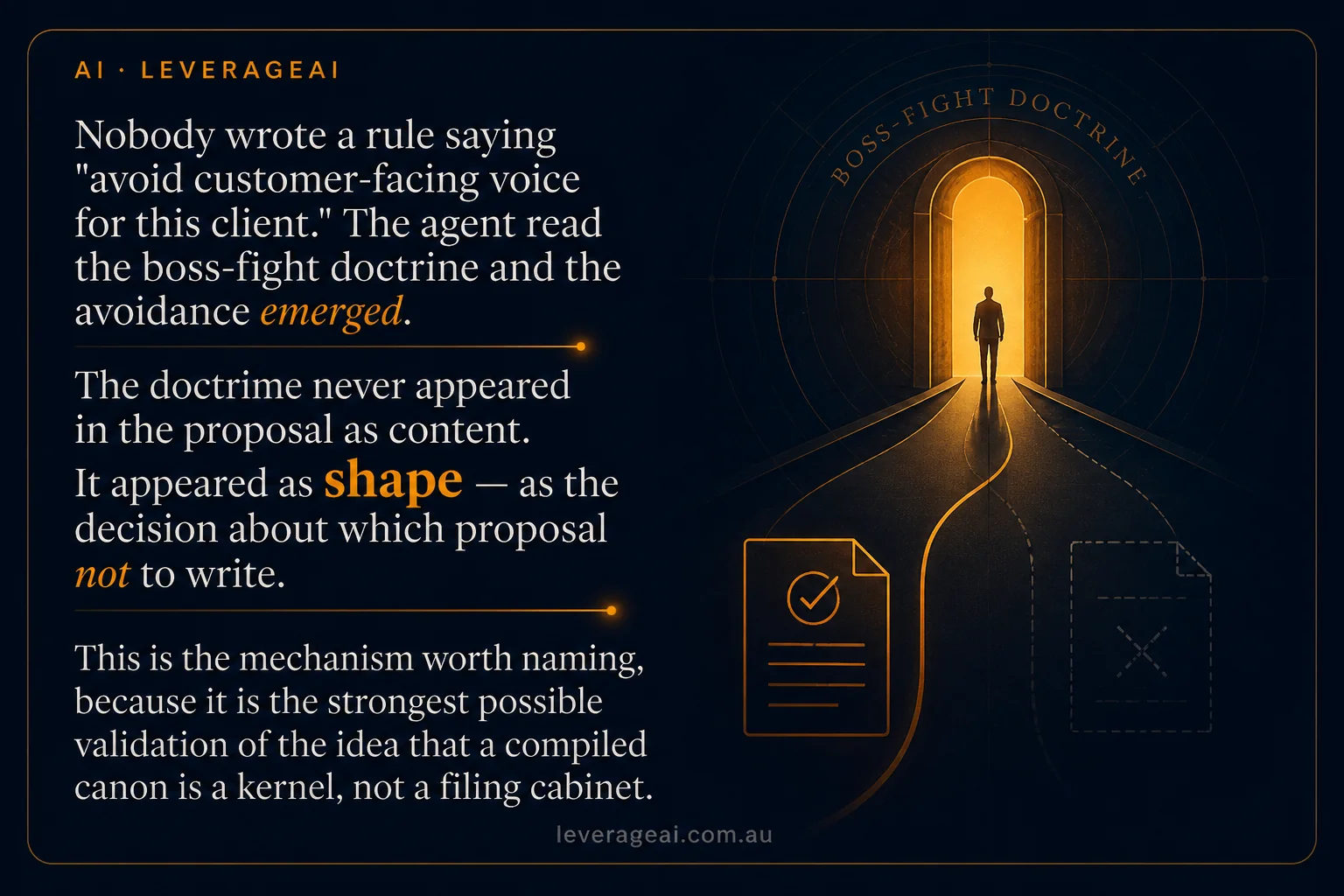
The important part is not that the agent found a relevant note.
That is the small version of AI knowledge management: better search, better retrieval, fewer lost documents.
Useful, but not strategic.
The bigger version is stranger.
A well-compiled body of thinking starts to act less like a library and more like a nervous system. It changes the shape of what the machine considers obvious. It changes the ideas it does not pursue. It changes the proposal it refuses to write.
That is where most organisations are underestimating the problem.
They are treating their internal knowledge as content to be fetched, when the higher-value move is doctrine to be absorbed.
Policies tell an AI what it is allowed to do.
A canon teaches it what kind of problem is worth wanting.
That distinction matters because the latest reasoning models are increasingly good at execution. If you give them a weak worldview, they will execute weak assumptions with impressive fluency. If you give them scattered documents, they will produce scattered strategy with better formatting.
The competitive advantage is not “we connected AI to our files.”
It is “we made our judgement legible enough that a machine can reason from it.”
Most companies do not have an AI problem yet.
They have an uncompiled-belief problem.
Discover more from Leverage AI for your business
Subscribe to get the latest posts sent to your email.