
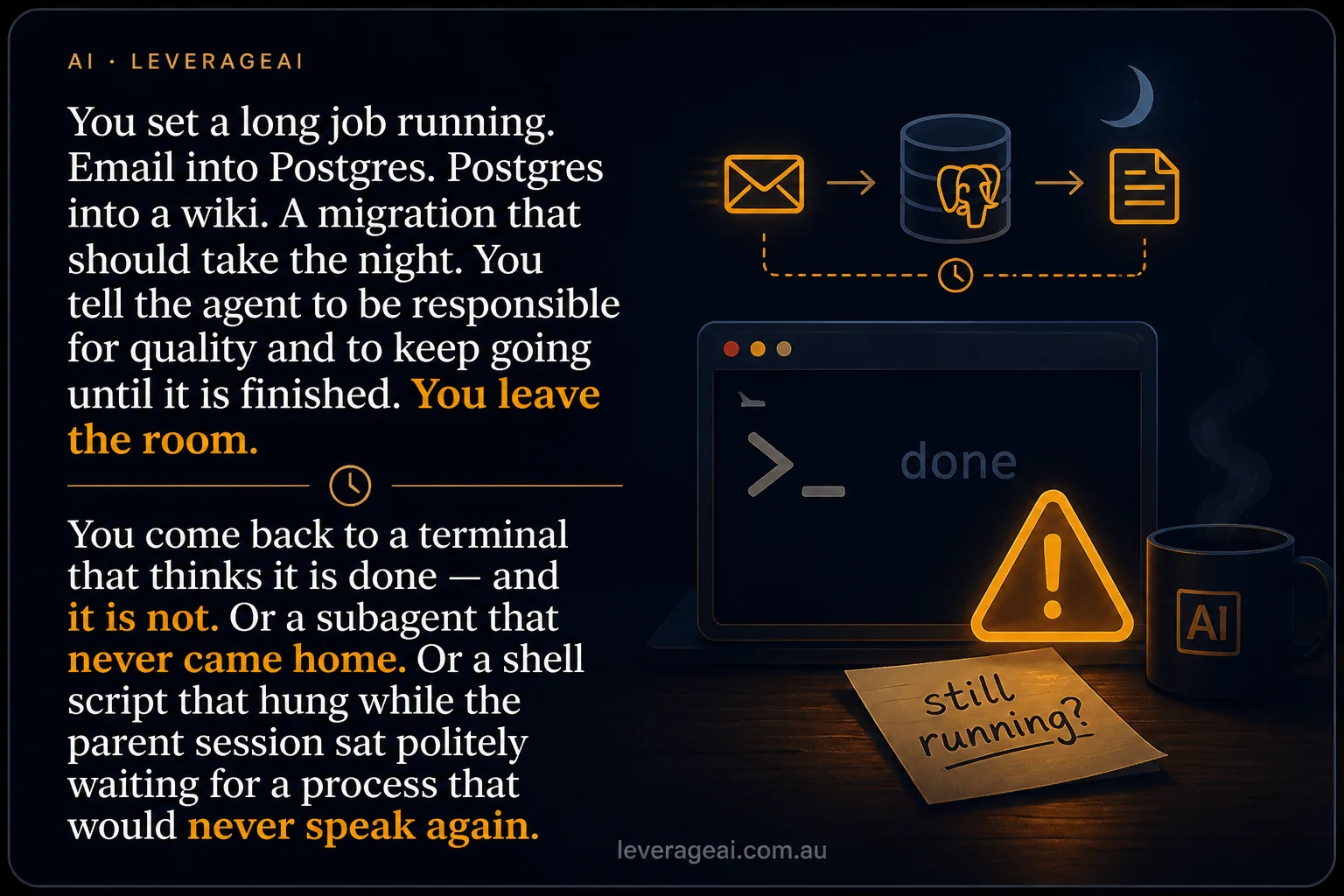
This is the part of agentic AI that gets underpriced.
Not whether the model can reason.
Whether the system can survive being left alone.
Most demos happen inside a conversation. A human watches, nudges, corrects, restarts, forgives. The failure mode is visible because the operator is still in the loop.
Real work is different.
Real work runs overnight. It crosses systems. It waits on APIs. It spawns subprocesses. It handles malformed data, rate limits, permissions, retries, timeouts, partial writes and ambiguous success states.
That is where “the agent is smart” stops being enough.
The hidden issue is not intelligence. It is custody.
Who knows whether the job is still alive?
Who can tell the difference between finished, stuck, degraded and pretending?
Who owns recovery when the child process disappears?
Who has the audit trail when tomorrow’s numbers are wrong?
A prompt cannot carry that burden.
If an agent is doing business work, it needs the boring machinery around it: state, checkpoints, health checks, logs, leases, retries, kill switches, reconciliation and evidence.
Otherwise you have not delegated work.
You have created a very confident unattended process.
Discover more from Leverage AI for your business
Subscribe to get the latest posts sent to your email.