
A “smarter” memory layer can make a system less useful.
Synthesis feels like progress because it turns mess into judgement. But judgement is also deletion. The system decides which patterns are central, which contradictions to resolve, and which awkward variants do not deserve to survive.
That is helpful when the job is recurring judgement. It is dangerous when the job is exploration.
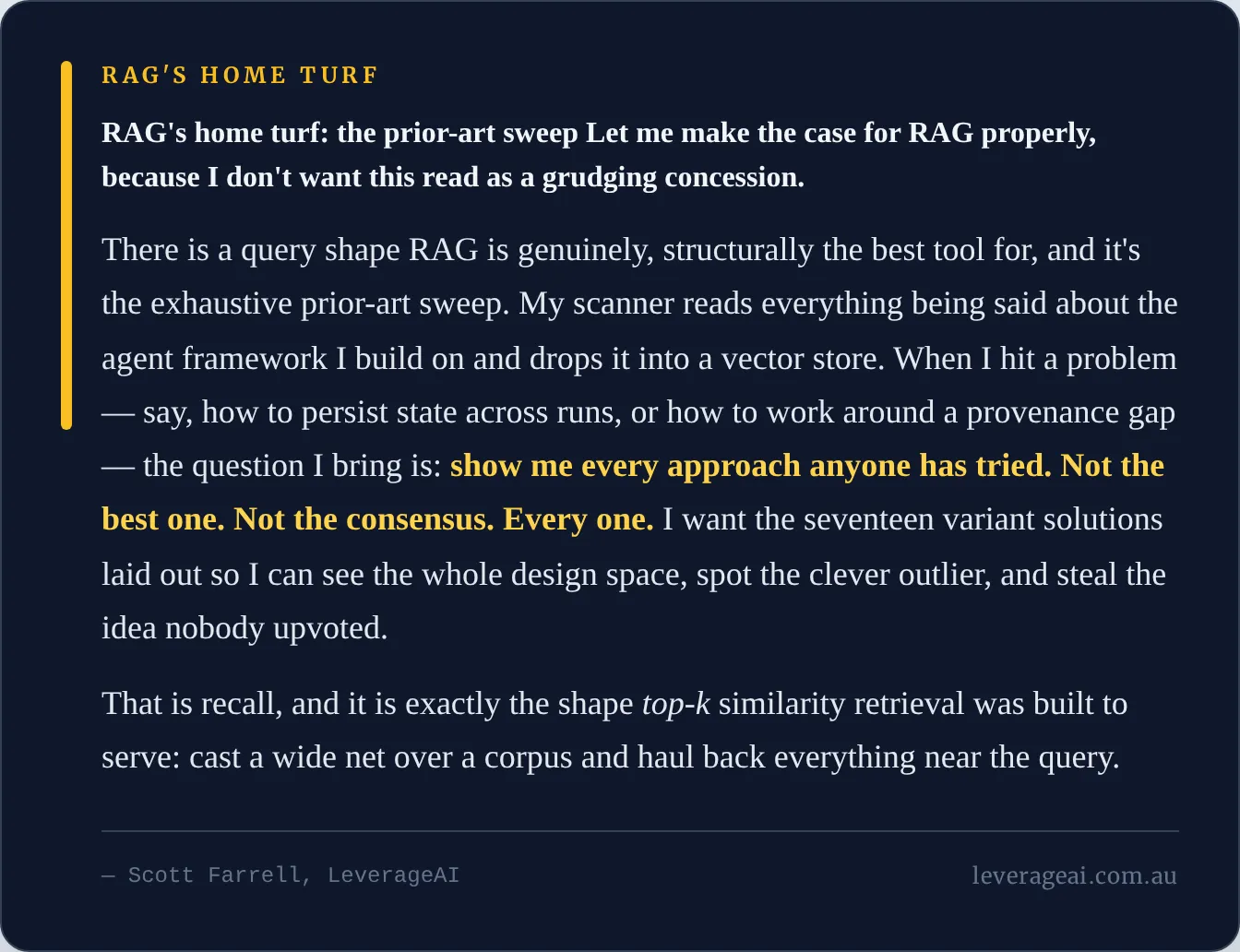
In prior-art research, the unfashionable answer may be the valuable one: the abandoned workaround, the low-consensus idea, the approach that fails in general but fits your constraints perfectly.
If your memory substrate compresses those into “the common approaches are A and B”, it has not merely produced an imperfect summary. It has removed the design space you were trying to inspect.
This is the architecture lesson: choose memory by query shape, not by which technology sounds more advanced.
RAG is not automatically exhaustive. Recall still depends on chunking, hybrid search, top-k settings and retrieval quality. But those are parameters you can tune towards completeness.
Synthesis is lossy on purpose.
That difference matters because a system can produce a cleaner answer while quietly making the best alternative invisible.
What has your AI system already decided you didn’t need to see?
Discover more from Leverage AI for your business
Subscribe to get the latest posts sent to your email.