
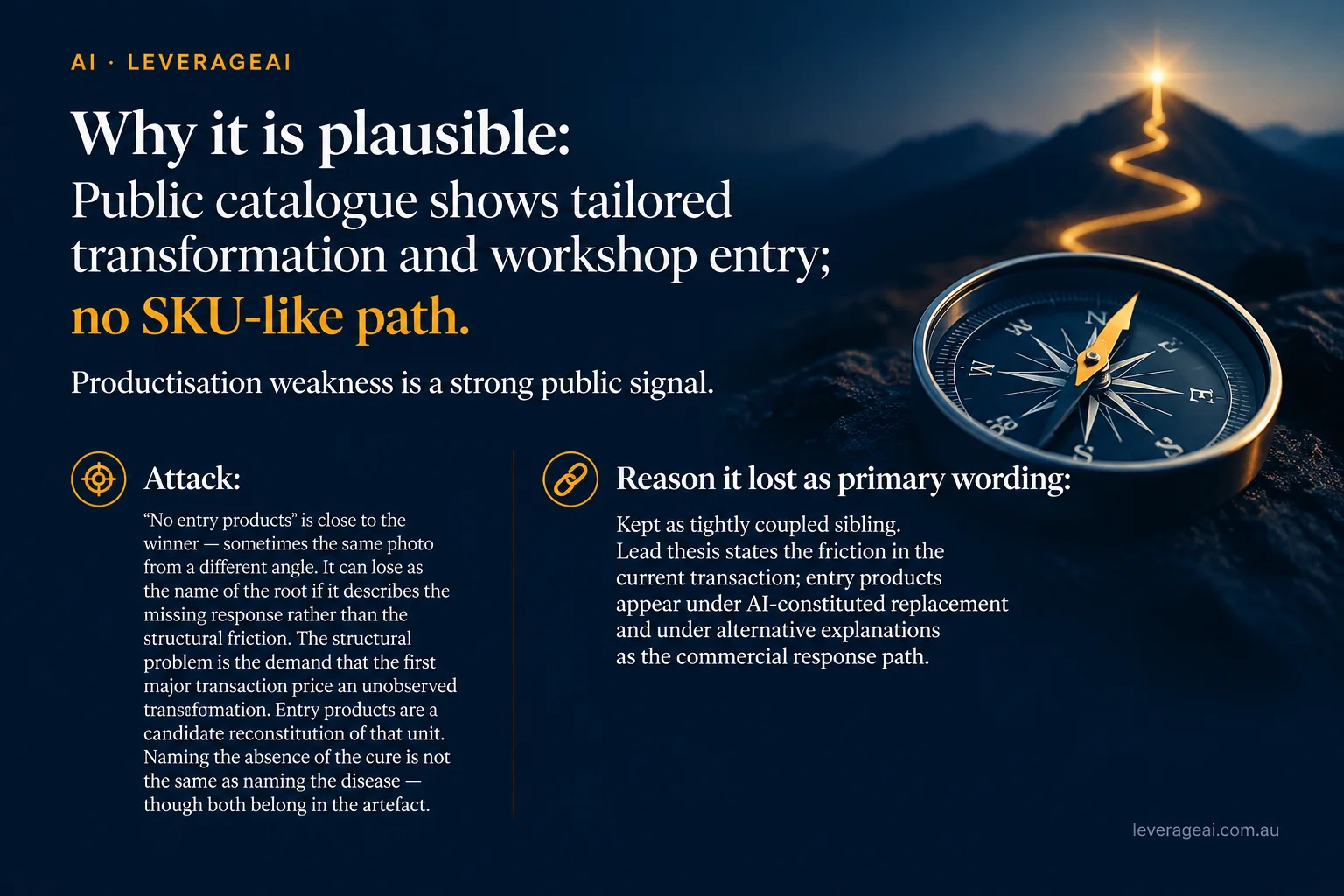
"You don't have an entry product" isn't a diagnosis. It's a sales pitch.
Picture a mid-sized data consultancy that sells bespoke transformation work. Its first big deal asks the client to accept a price for a change nobody has properly looked at yet. Months of work get scoped, estimated and signed before anyone has seen the data, the systems or the politics.
The easy verdict from outside is: they need a small, fixed-price starter offer. A readiness assessment. Something buyable.
That might be the right response. It is still not the problem.
The problem is the order of events: commitment before evidence. The firm prices what it hasn't observed. Then plenty follows from that. Senior people burn unpaid hours writing proposals. Assumptions get frozen into a statement of work. Delivery reopens everything the contract pretended was settled.
"No entry products" names a missing cure. Naming the absence of the cure is not the same as naming the disease. And when the remedy gets written into the diagnosis, it skips the test it should have had to pass.
Here's why the distinction matters in practice. A leadership team can approve a shiny new assessment, put it on the website with a price and a three-week clock, and change nothing. If the big transformation deal is still priced on the same thin evidence, the assessment is a new item on the menu, not a new transaction. The thing to check isn't whether the offer exists. It's whether it changes what the firm knows before the large commitment is priced.
The reverse matters too. A firm whose website still shouts "tailored transformation" may already push most first deals through a genuine paid assessment. Marketing just never caught up. Public language can justify the question. It can't answer it.
So diagnose the friction first. Then ask whether your favourite fix actually touches it.
Discover more from Leverage AI for your business
Subscribe to get the latest posts sent to your email.