Precision is not the same as clarity.
In AI work, it is often the easiest way to avoid clarity.
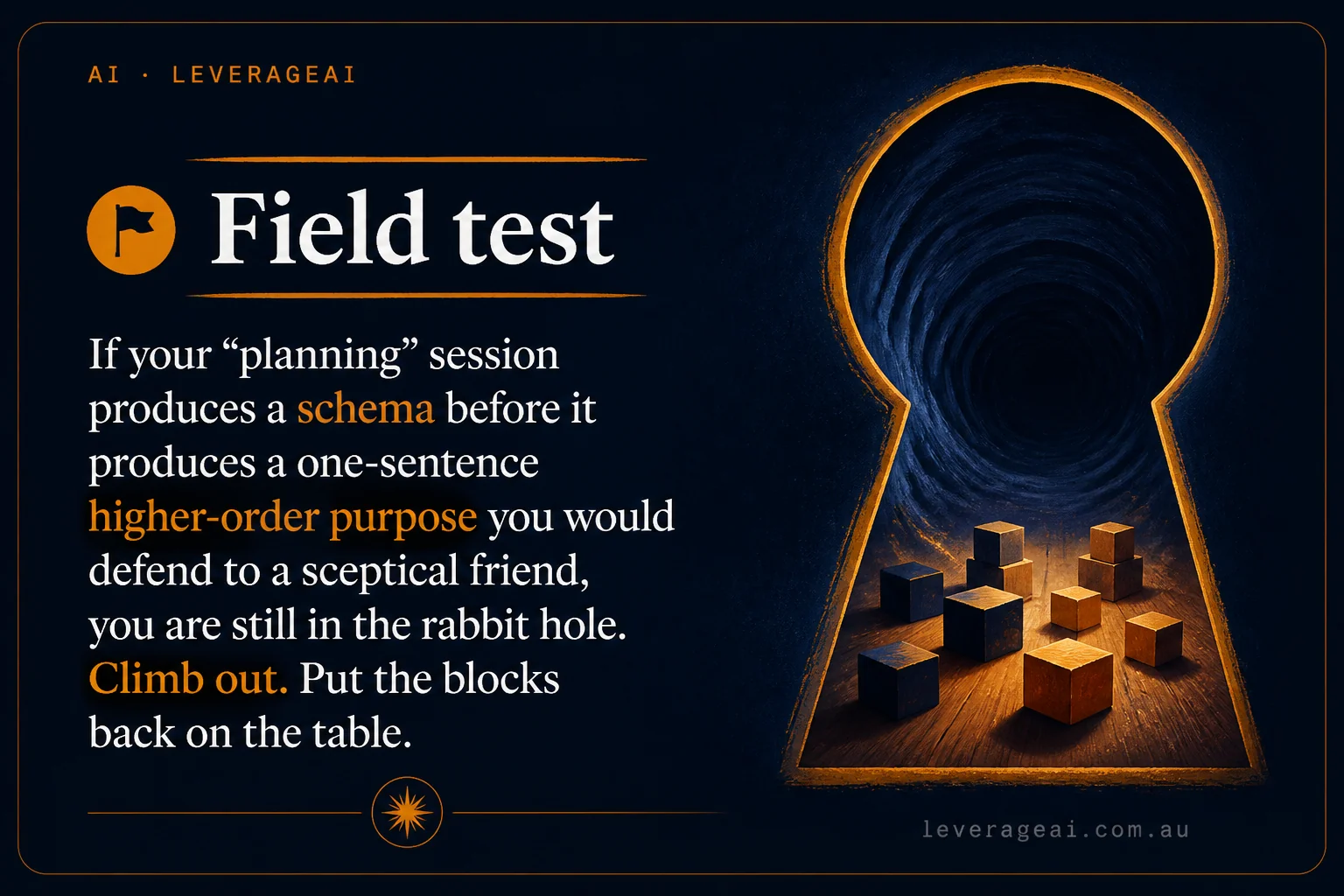
Technical detail gives a room the sensation of progress. There are entities to name, systems to connect, estimates to approve. Everyone can contribute without confronting the harder strategic question: what change are we actually trying to create?
That avoidance used to become expensive slowly. Abundant machine execution makes it expensive fast.
Once implementation starts, its artefacts begin manufacturing their own justification. The pipeline exists. The data is moving. The dashboard has users. Activity becomes evidence that the original direction was sound.
Soon, sunk cost hardens into strategy.
This is why premature specificity is not merely a delivery mistake. It is a governance failure. It allows the first convenient technical interpretation to make a strategic decision leadership never consciously made.
Good planning does not eliminate ambiguity as quickly as possible. It protects the important ambiguity until the organisation has resolved what deserves to become precise.
The hidden risk of powerful AI is not that it cannot execute the plan. It is that it can execute an unexamined plan with extraordinary speed and competence.
What is your current AI project making precise before leadership has made it true?
Discover more from Leverage AI for your business
Subscribe to get the latest posts sent to your email.