
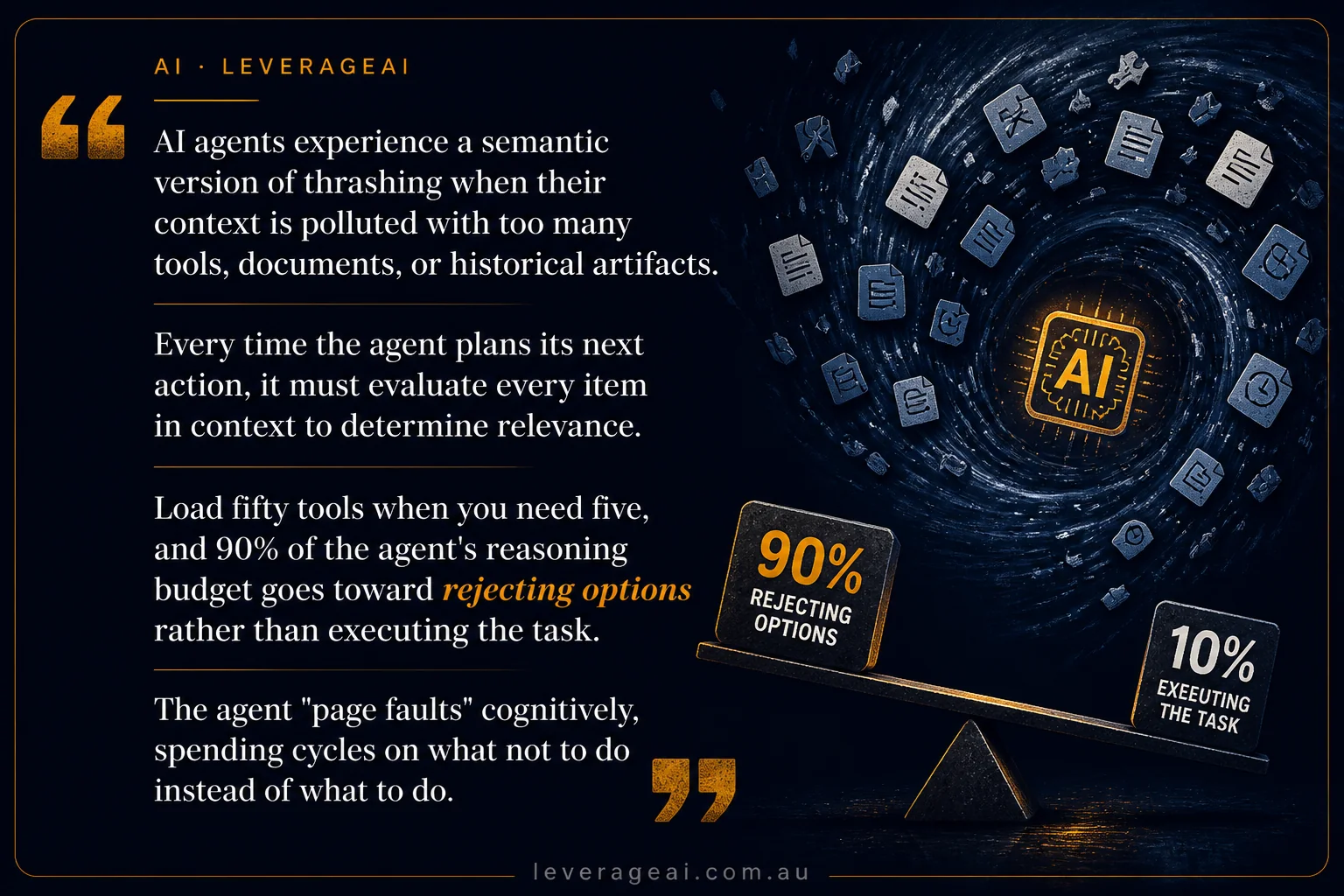
The easiest way to make an AI agent look less intelligent is to give it more capability.
That sounds paradoxical only if you assume tools are free. They aren’t. Every addition expands the decision surface before useful work can begin.
The consequence is more serious than latency or token spend.
A badly architected environment can make a frontier model appear unreliable. Teams then blame the model, rewrite the prompts, add more guardrails or buy another platform—when the real defect is an architecture that forces intelligence to navigate clutter before it can act.
“Just in case” context is not neutral. It is a tax imposed on every subsequent decision.
The strongest agent systems won’t be those connected to the most tools or carrying the most organisational knowledge. They’ll be the ones with the clearest boundaries: narrow working sets, explicit interfaces and deliberate forgetting.
Before you replace the model, inspect the room you’ve made it think in.
Discover more from Leverage AI for your business
Subscribe to get the latest posts sent to your email.