
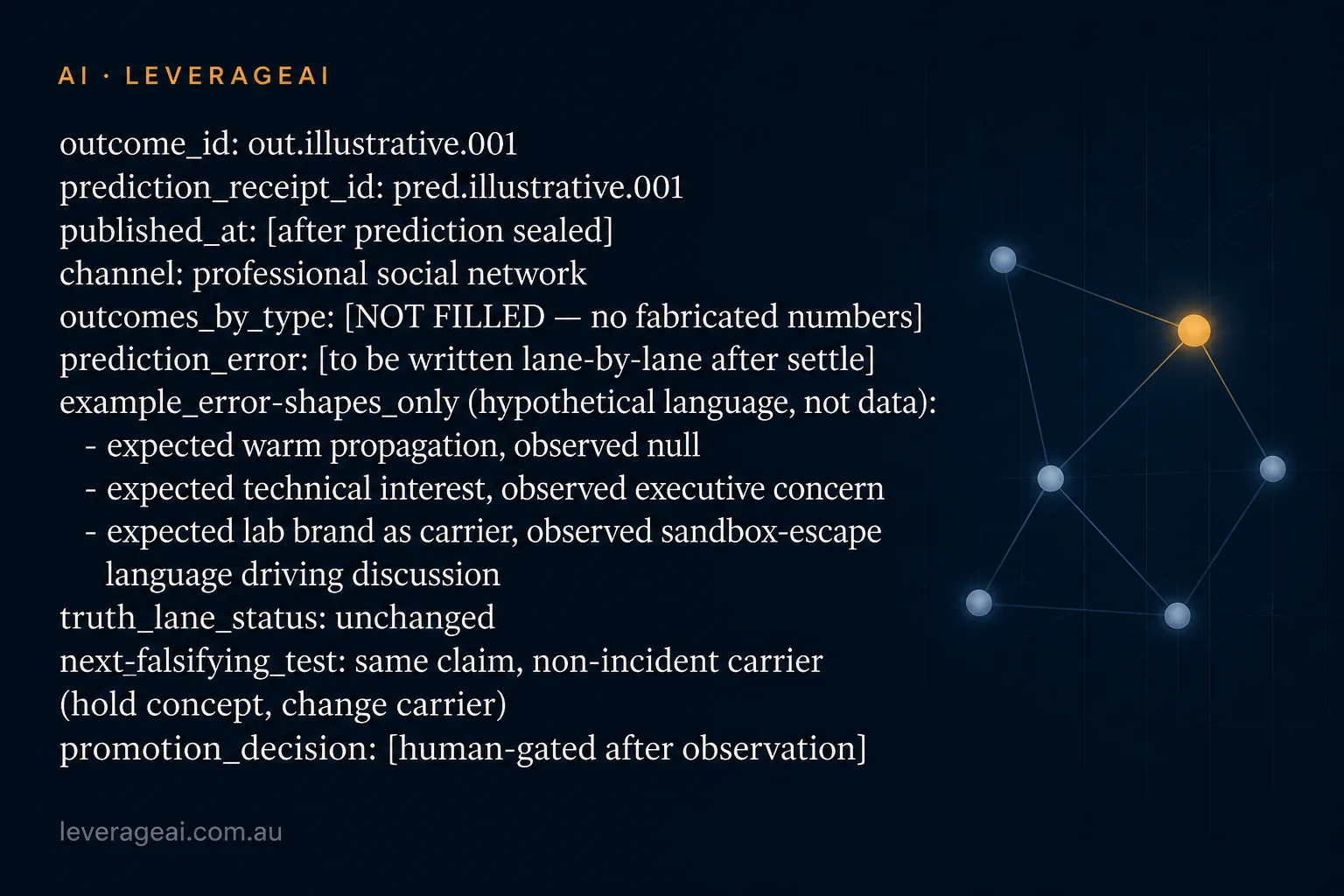
The most honest thing on this card is the empty space.
Every field that would carry a number is unfilled. Not because the numbers are secret, but because the observation hasn't happened yet. The prediction was sealed before the post went out. The outcomes get written after, against what was actually expected — not against what would be flattering to have expected.
That sequence is the whole point, and almost nobody follows it.
What normally passes for learning in content, in pilots, in AI deployments generally, is retrospective narration. Something happens. We reach for the explanation that makes the last decision look deliberate. Reach flops, so the timing was wrong. Reach spikes, so the message resonated. Both stories are constructed after the fact, and neither one could have been wrong, which means neither one taught anything.
An expectation written down beforehand can be wrong. That is its entire value.
There's a second discipline hiding in the error shapes, and it's the one I see leaders miss most often. When a thing lands badly, the instinct is to conclude the idea was bad. But a null result might mean the audience was wrong, or the framing was wrong, or the format carried it into the wrong room. The claim and the vehicle carrying the claim are separate objects, and they fail separately. Collapse them and you'll kill good work because the packaging was off — or keep bad work alive because it happened to be dressed well.
So the truth lane stays marked unchanged until something actually challenges the truth. The next test holds the concept and changes the carrier. And promotion stays human-gated, because a system that can promote its own results on its own evidence is a system that will eventually tell you what you want to hear.
None of this proves the method works. That's rather the point — the card can't claim a result it hasn't observed yet. It only makes the eventual result harder to lie about.
Which raises the uncomfortable question for anyone running AI experiments right now: for your last three initiatives, did you write down what you expected before you found out? If not, you don't have results. You have a story.
Discover more from Leverage AI for your business
Subscribe to get the latest posts sent to your email.