The most dangerous strategic blind spot is not missing data.
It is an omission nobody can see.
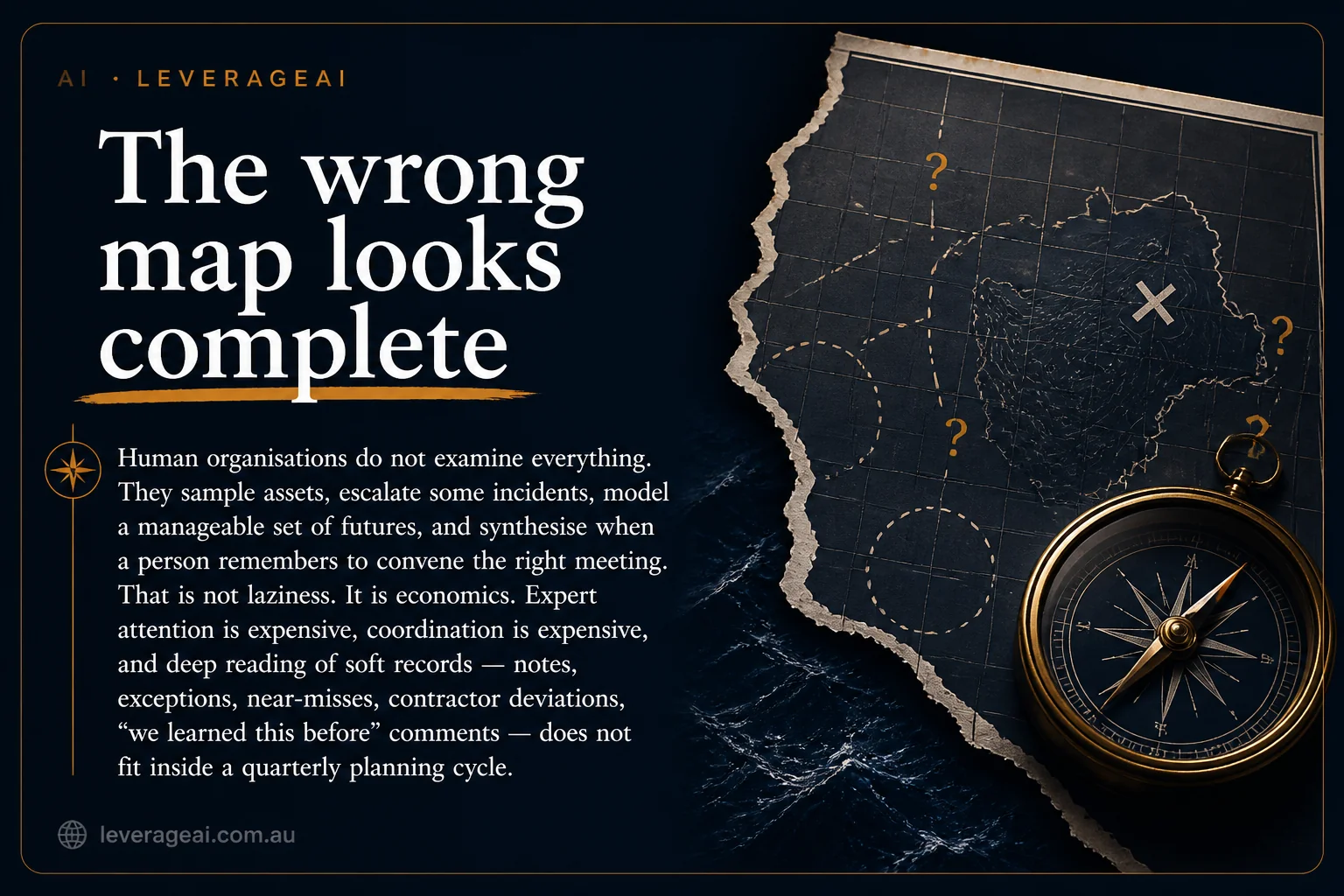
Executives rarely decide from the organisation’s full memory. They decide from what survived the reporting chain: clean metrics, escalated incidents and approved assumptions.
The messier evidence—near-misses, exceptions, abandoned ideas, contractor notes, lessons buried in project files—remains scattered and therefore politically weightless.
That creates a peculiar kind of confidence. The board pack is coherent. The risk model reconciles. The strategy has supporting evidence.
But the evidence was filtered by the economics of human attention before anyone began reasoning.
This is where AI matters more than another productivity feature. It can change what is economically examinable. Not by making the decision, but by widening the field from which a decision is made.
Ignore that shift and you do more than miss an insight. You repeatedly pay to relearn what the organisation already knew—and call the result uncertainty.
How much of your strategy rests on the evidence that was easiest to retrieve, rather than the evidence that mattered?
Discover more from Leverage AI for your business
Subscribe to get the latest posts sent to your email.