Most strategy forecasts are designed to survive being wrong.
That is why they are so popular.
“This will transform the business” creates momentum without creating accountability. If the project disappoints, the story can always be revised: adoption was slow, the market moved, the team lacked capability, the technology wasn’t ready.
Nothing was specified sharply enough to be disproved.
A serious framework removes that escape hatch.
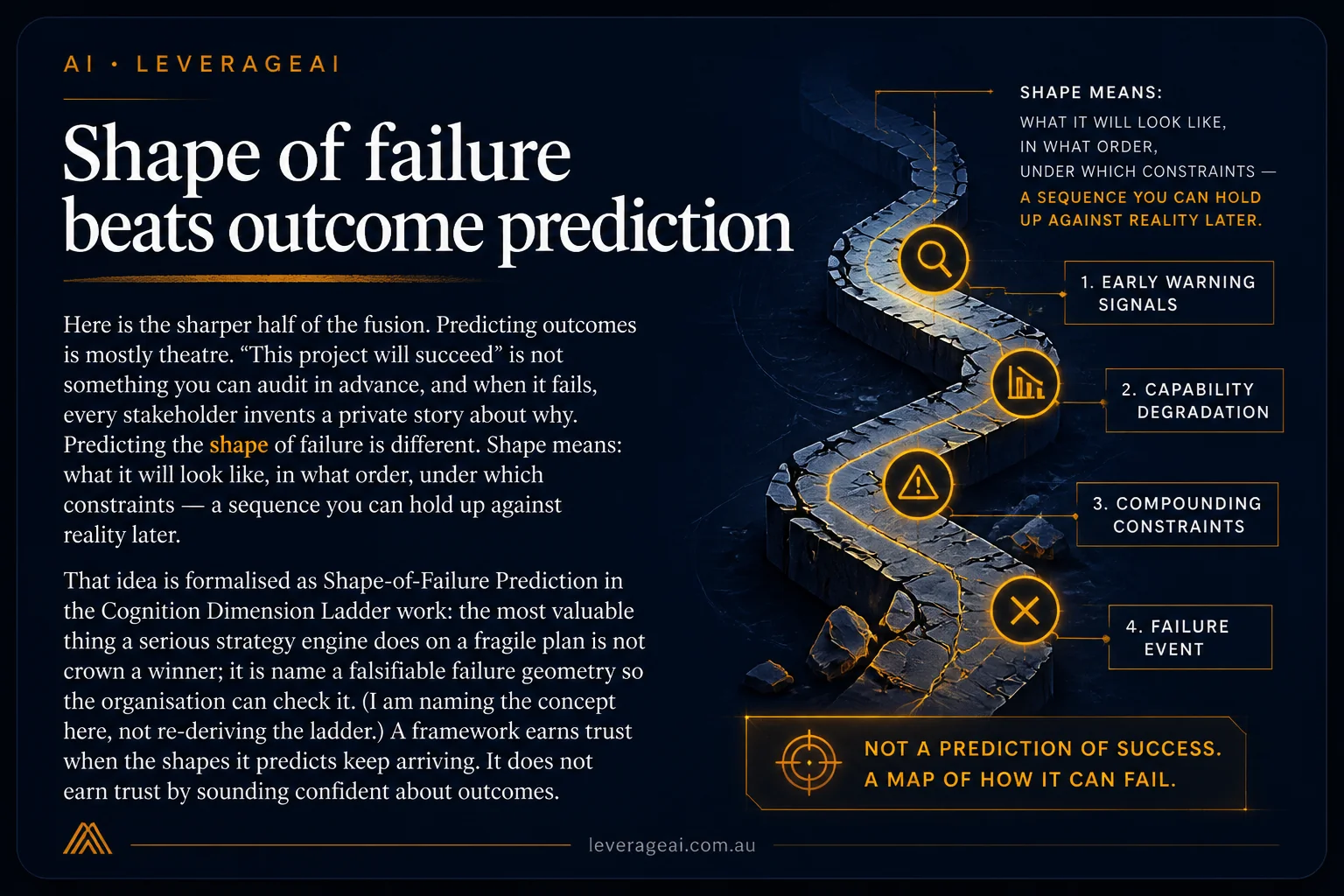
It forces the organisation to state, before the money is spent, where pressure will appear first, which assumptions will break, what evidence will confirm it, and when leadership should kill, fix or double down.
That changes more than forecasting. It changes governance.
Pet projects become harder to protect. Vendor promises become easier to test. Post-mortems become less political because the expected failure sequence was written down before anyone knew who would need defending.
The uncomfortable consequence is that many organisations do not actually want better prediction. They want confidence now and interpretive freedom later.
Before approving the next AI initiative, ask the team to write its post-mortem in advance.
If they cannot describe how it is likely to fail, what exactly are you funding?
Discover more from Leverage AI for your business
Subscribe to get the latest posts sent to your email.