
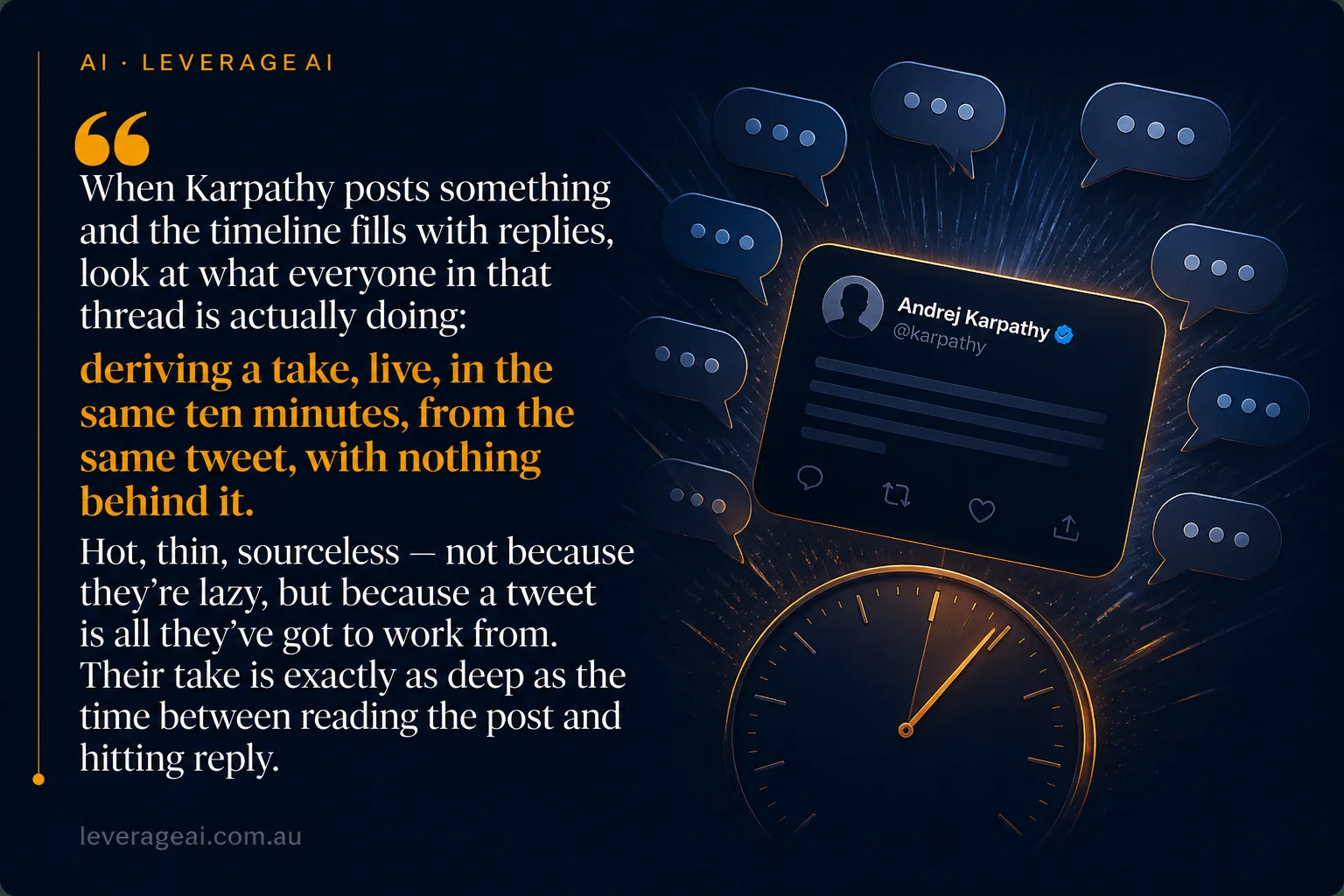
The line looks like a jab at reply-guys. It isn't. It's a statement about supply.
Nobody in that thread is short of intelligence or tools. They're short of inventory. You cannot retrieve a position you never took, so the only thing available at speed is whatever can be improvised on the spot — and improvisation has a ceiling that no frontier model raises.
That's the part worth sitting with, because it doesn't stay on the timeline.
Your competitor announces something on a Tuesday. A regulator drops guidance. A client asks, in the room, what this actually means for them. The quality of what you say next is set almost entirely by whether you'd already done the thinking — before anyone needed it, when there was no deadline making you.
Most organisations haven't. They have documents, not positions. So when the moment arrives, AI does exactly what it's asked: it helps them produce a thin reaction faster, more fluently, in better prose. Speed applied to nothing is still nothing.
The people who look fast are rarely thinking fast. They're looking something up.
Which raises a question I'd rather ask now than in the moment: if the market demanded your view this afternoon, would you be retrieving it — or writing it for the first time?
Discover more from Leverage AI for your business
Subscribe to get the latest posts sent to your email.