
A surprising amount of “model selection” is really architecture debt.
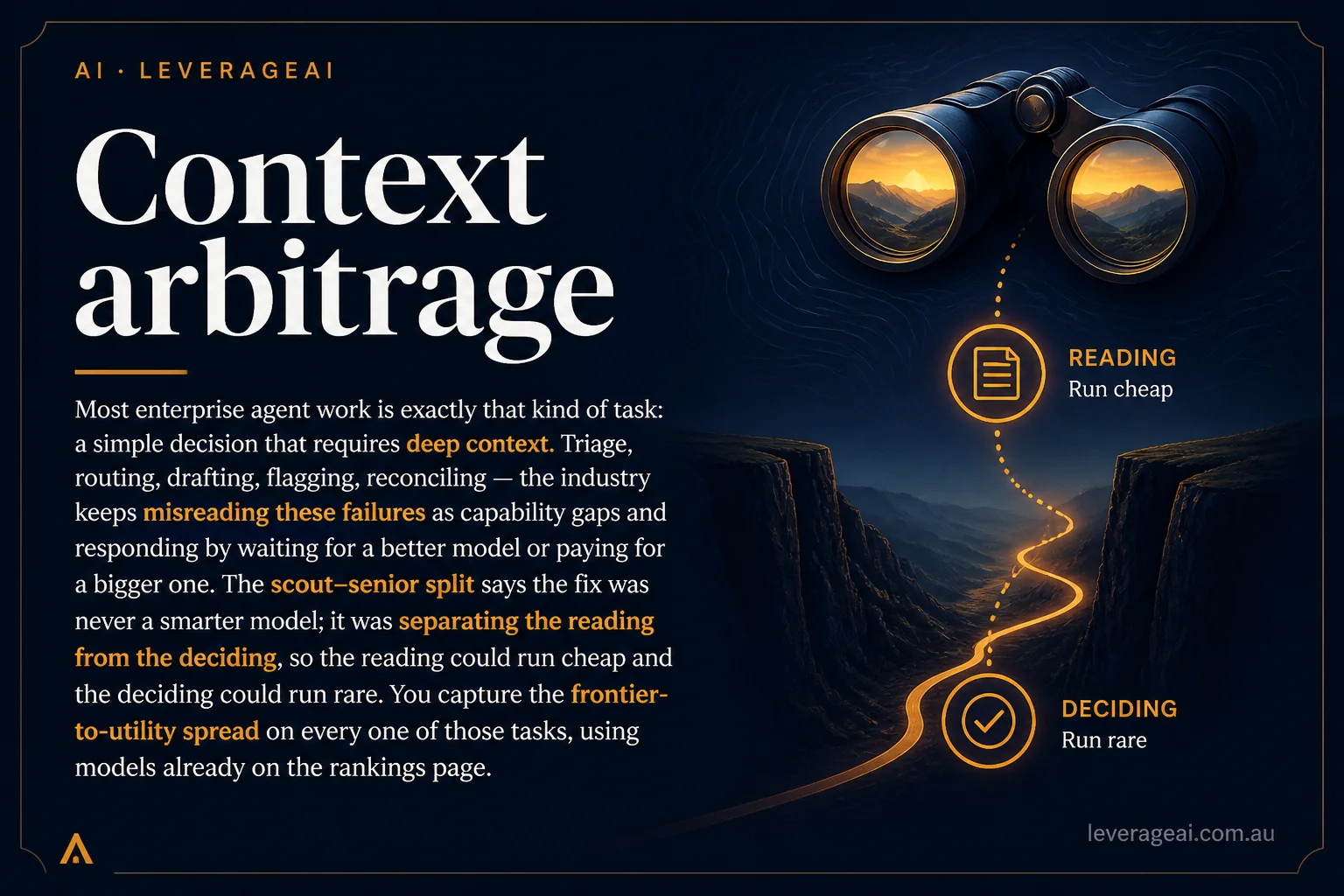
When teams benchmark an agent end to end, the task appears to require an expensive model. But the benchmark has bundled two different jobs: building the map and making the call.
That mistake gets expensive twice.
First, frontier pricing is applied to every page read, record checked and path ruled out.
Then the usual attempt to recover the economics—summarising the exploration before handoff—deletes the negative evidence. The final decision-maker sees what was found, but not what was tested and rejected.
So the system pays premium rates for the low-value work, then compresses the high-value context.
The deeper consequence is strategic: viable use cases get rejected because their unit economics were measured against the wrong architecture. Leaders think they are waiting for cheaper or smarter models when they are actually waiting for someone to redraw the system boundary.
For context-heavy work, the question is not “Which model can do the whole task?”
It is: “At what exact moment does expensive judgement become necessary?”
Discover more from Leverage AI for your business
Subscribe to get the latest posts sent to your email.