
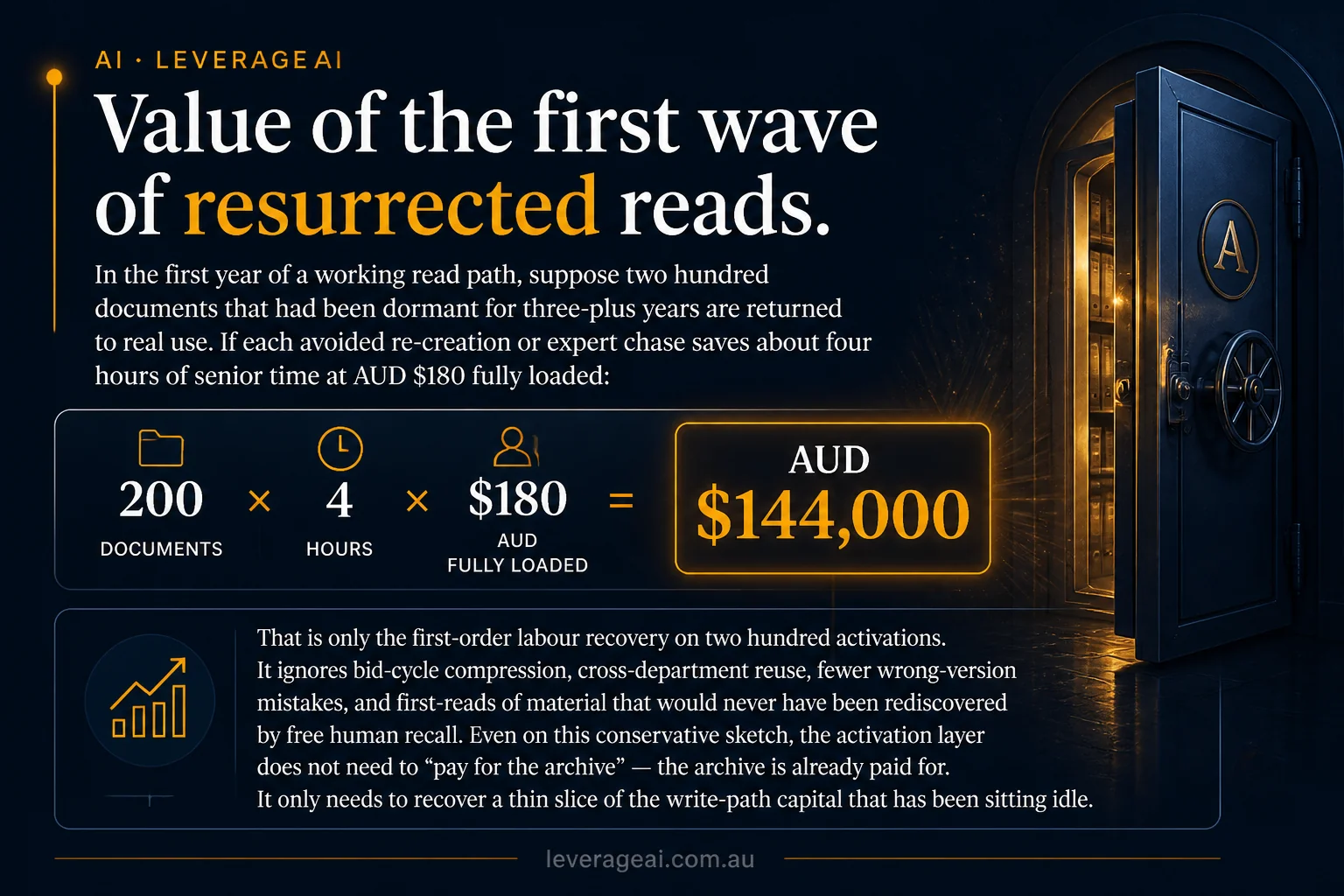
Notice what this number quietly refuses to do: justify the archive.
That's the whole move. Most people kill a knowledge-activation project on the wrong math. They add up a decade of storage, metadata, migrations, the SharePoint bill, the librarians — and ask whether "reading it" can pay all that back. It can't. Nothing can. So the project dies, and the attic stays locked.
But that money is already gone. You spent it. It was mandatory — audits, handovers, close-outs forced you to write everything down. The write path was never optional. The read path was.
Which means the decision in front of you isn't "is the archive worth it." The archive is paid for. The only live question is whether recovering a thin slice of that sunk capital is worth a modest build. And once you frame it that way, the answer stops being close.
The part that should sting is what the arithmetic leaves out. That figure is just senior hours you'd otherwise burn re-creating things that already exist. It counts none of the bids you'd win faster, none of the wrong-version disasters you'd dodge, none of the material no human would ever have remembered to look for. The conservative case already clears the bar. The real case isn't even in the room yet.
Every year you treat this as a cost centre, you keep paying to write and refusing to read. That's not thrift. That's an organisation buying groceries and letting them rot because cooking felt like a new expense.
You didn't underinvest. You over-wrote and never read.
Discover more from Leverage AI for your business
Subscribe to get the latest posts sent to your email.