
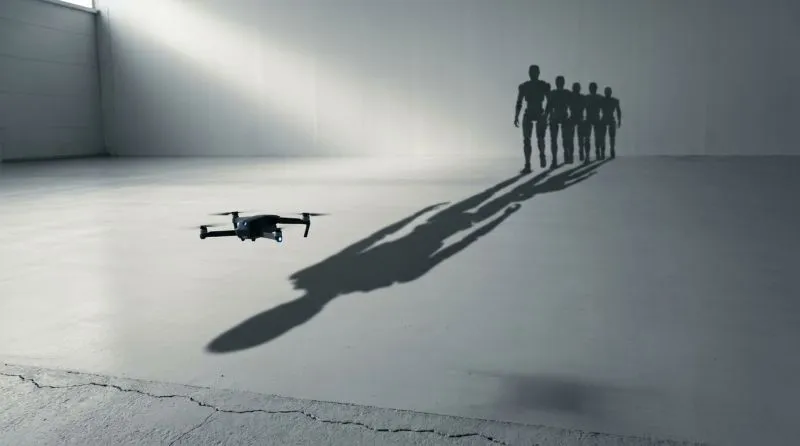
The first AI war doesn't look like the movies. That's exactly why people are missing it.
I always pictured a robot war as humanoid machines walking forward with rifles. Skynet. Terminators marching over a hill.
It's here now — and it looks nothing like that.
On June 18, Ukraine launched its largest-ever strike on Moscow. Russia says it faced close to 1,000 drones in a single day, with the Moscow oil refinery hit for the second time in a week. No soldiers marching. No androids. Just cheap,
non-human machines arriving in numbers no air defense was built to absorb.
Sit with that for a second: the robots already took over the battlefield — and they don't have faces.
Drones now cause around 70% of casualties on both sides — more than artillery, tanks and missiles combined. The front line has become a 20–50km "kill zone" where almost anything that moves gets found and destroyed. Not by a sci-fi general. By software.
Because AI isn't the commander here. It's the plumbing.
The drone is the AI innovation delivery system. Innovate faster, send more/better/smarter drones.
→ Onboard computer vision locks onto a moving target in the final 500 metres — defeating the GPS jamming that used to
be the best defense.
→ That one capability turns a rookie pilot into a near-expert one, roughly 4x more effective.
→ Algorithms route and de-conflict swarms of hundreds, because no human can fly one drone out of a thousand.
AI designs the frames, trains on the footage, and flies the last mile. Russia's counter? Painting tanks with zebra
stripes to confuse the vision models. That detail tells you exactly what kind of war this is now.
Then there's the economics — and this is the real lesson.
A strike drone costs $500 to $50,000. The interceptor missile to stop it can cost up to $4 million. By one estimate,
every $1 spent building a drone forces $20–$28 to shoot it down. You don't out-engineer that with a better missile. You lose to it slowly, then all at once.
It even rewrites deterrence. A nuclear weapon is power you can't use. A thousand AI-guided drones is power you can — usable, scalable, and impossible to fully stop.
Here's why I'm writing this on a page about business strategy:
AI doesn't win by being a better version of the expensive thing. It wins by collapsing the cost of the action until the
expensive thing becomes a liability.
That is happening to industries right now — quietly — while leaders keep optimising the old machine.
The drones didn't need to look human to win. Neither does the AI rewriting your cost structure.
The only question that matters: The expensive old machine doesn't lose to a better machine. It loses to a cheaper one that learns faster
Discover more from Leverage AI for your business
Subscribe to get the latest posts sent to your email.