
Your voice bot isn't failing because AI is weak. It's exposing your gaps.
Put a voice agent on your inbound phone line and you're asking one real-time answer to carry everything at once: who's calling, whether they're allowed to ask, what your systems actually say, what policy permits, and what happens if the caller is in distress.
All of it inside a few hundred milliseconds. With no second chance.
Most organisations don't have those pieces working for their human staff. Identity is a caller ID and a date of birth. Permissions live in someone's head. The "truth" is split across three systems and a spreadsheet. Escalation is a queue that rings out.
A human receptionist covers those gaps with judgment, and sounds unsure when they can't help. A voice agent covers nothing. It just sounds calm, confident and caring while being operationally powerless. A stressed caller hears "I'm here to help" and believes help is coming.
So replacing the human too early doesn't remove the service problem. It hands that problem straight to your customer, wearing a friendlier voice.
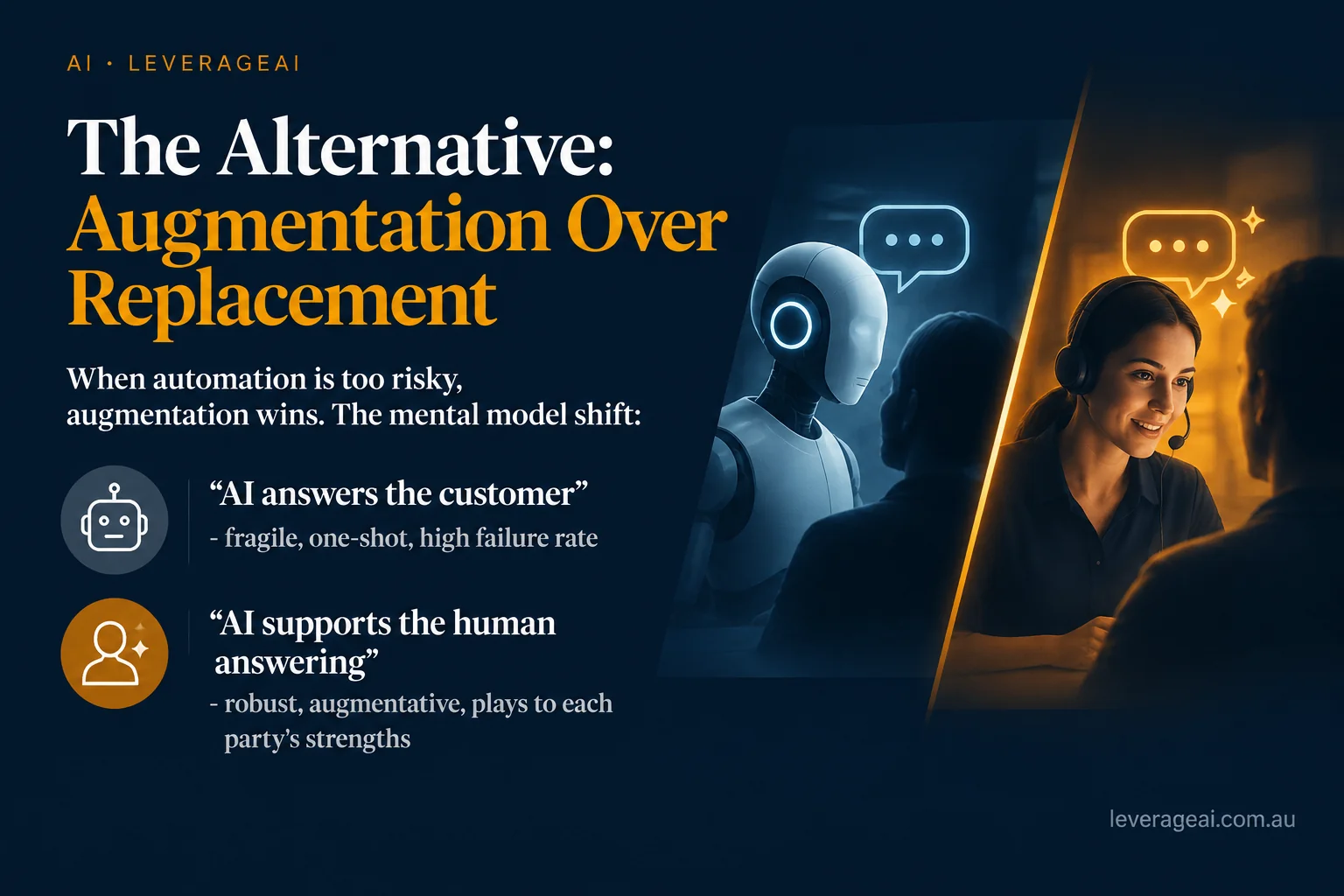
That's why "AI supports the human answering" beats "AI answers the customer" right now. It isn't the timid option. It's the more production-ready architecture.
The human keeps judgment and accountability. The AI does what it's good at: pulls caller history before they finish speaking, flags risk signals, suggests next actions, writes the notes and CRM updates after the call. Nothing irreversible rides on a single real-time guess.
Full automation can work. Narrow, ring-fenced jobs like appointment cancellations succeed when verification, integration and escalation genuinely exist. The mistake is replacing people before the organisation underneath them is ready.
If your voice bot went live tomorrow, which gap would your customers find first?
Discover more from Leverage AI for your business
Subscribe to get the latest posts sent to your email.