Your knowledge base remembers everything. It still isn't thinking.
Plenty of organisations are building searchable archives of past decisions, reports and project files, then calling the result institutional intelligence.
Finding an old document proves memory. That's all it proves.
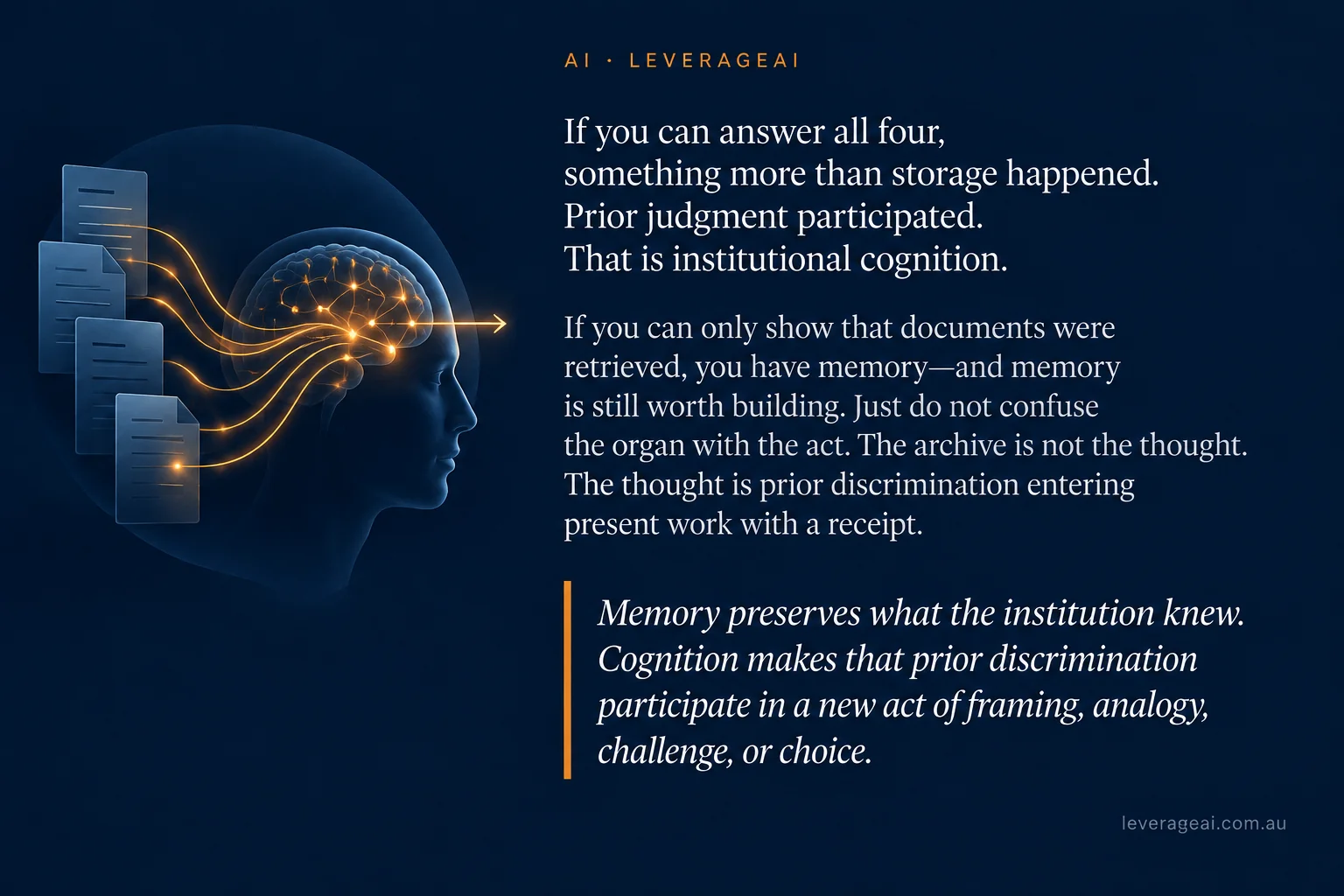
Memory is worth building. Losing what you once knew is expensive, and a good archive stops that bleed. But an archive is the organ, not the act.
Institutional thinking happens somewhere else. It happens when a past judgment actually shapes a new decision: what mattered last time, what got rejected, which distinction someone fought for, and why.
That earlier judgment has to show up in the new work. It might reframe the problem, supply the right analogy, challenge the obvious answer, or tip a choice. And you have to be able to show the receipt, tracing exactly how that prior reasoning entered today's call.
Without the receipt, you have a library with a fast search bar. The material comes back. Nobody can say whether it changed anything.
This is easy to miss because retrieval looks sophisticated. A system that surfaces the right memo in two seconds feels smart. But surfacing the memo and letting its judgment participate are different events. Only one of them is the organisation thinking.
So here's a sharper question for your next review than "can we find it?":
Which decision this quarter was demonstrably shaped by something we learned before, and can we point to where?
Discover more from Leverage AI for your business
Subscribe to get the latest posts sent to your email.