
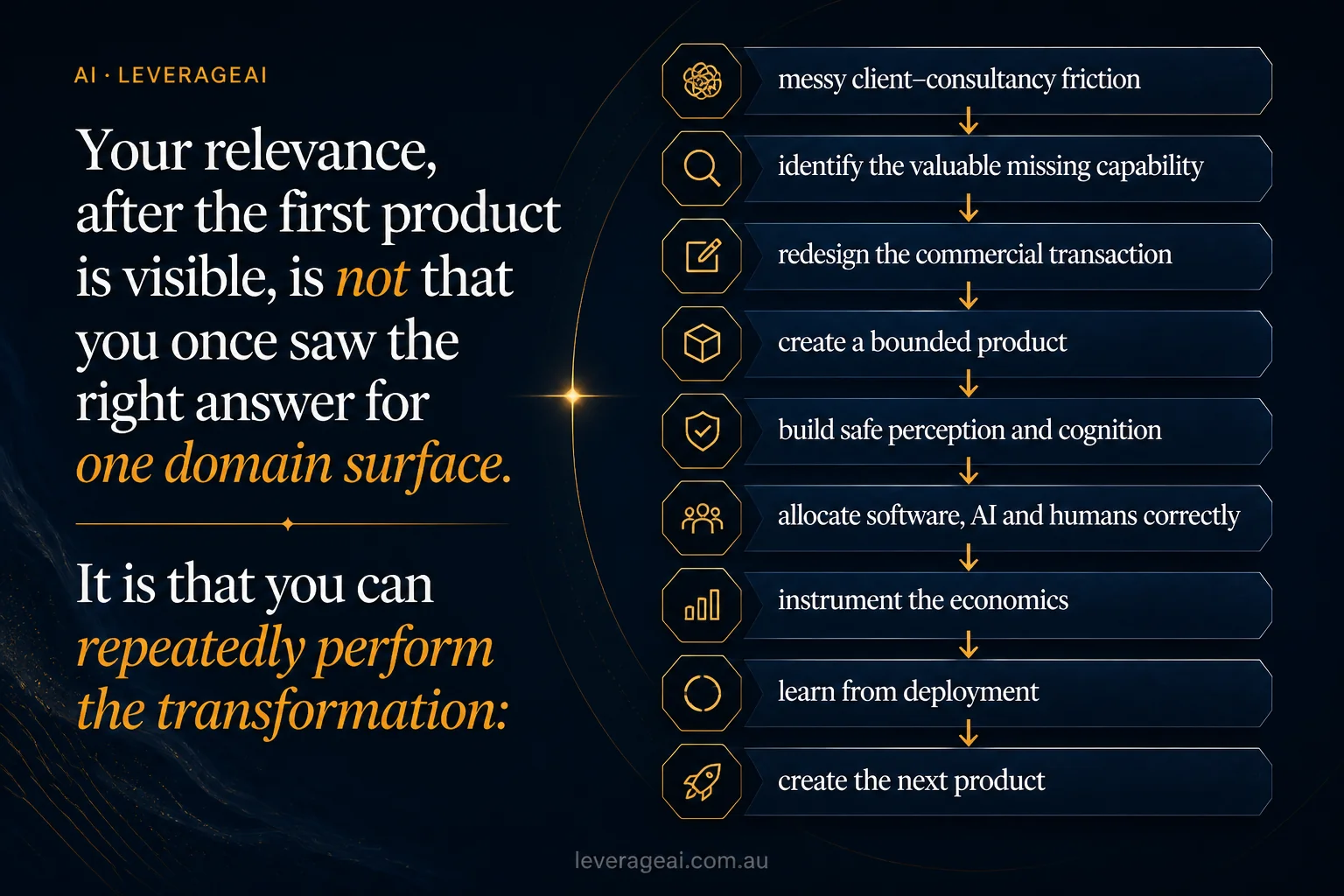
One successful product can conceal an unchanged consultancy.
The product creates a seductive story: we found recurring pain, encoded our expertise and escaped the limits of billable work.
Perhaps.
But if the next opportunity still depends on a founder noticing the pattern, a rainmaker hearing the right complaint or an exceptional client engagement exposing the answer, then very little has changed.
The artefact is new. The operating capability is not.
That is what this line exposes.
A product is evidence that a firm understood one problem well enough to bound it. It is not evidence that the firm can systematically discover the next one, govern its risks, instrument its economics or learn from deployment.
The consequence is a fragile kind of relevance. The first product may sell, yet every product after it remains another bespoke act of insight.
The real test starts after launch:
Can the organisation reproduce the transformation without relying on the same people, the same client context or the same lucky observation?
The first product proves you found an answer once.
The second begins to prove you built a way to keep finding the right problems.
Discover more from Leverage AI for your business
Subscribe to get the latest posts sent to your email.