
Your AI practice doesn't feel exciting anymore. That proves nothing.
Around week six of using AI seriously, the novelty goes. The answers stop feeling magical. You stop noticing you're getting better. And that's usually when people quit, because they're judging progress by how it feels.
Feelings are terrible instruments for measuring slow, compounding change. You don't notice your own vocabulary widening. You don't notice that you now push back on the first answer, or that your prompts carry context they never used to. Improvement you live inside is invisible to you.
So measure it. In week one, before the habit sets in, write down two numbers:
— How long it takes you to go from an idea to a draft you'd actually send.
— How many rounds of revision before it's good enough.
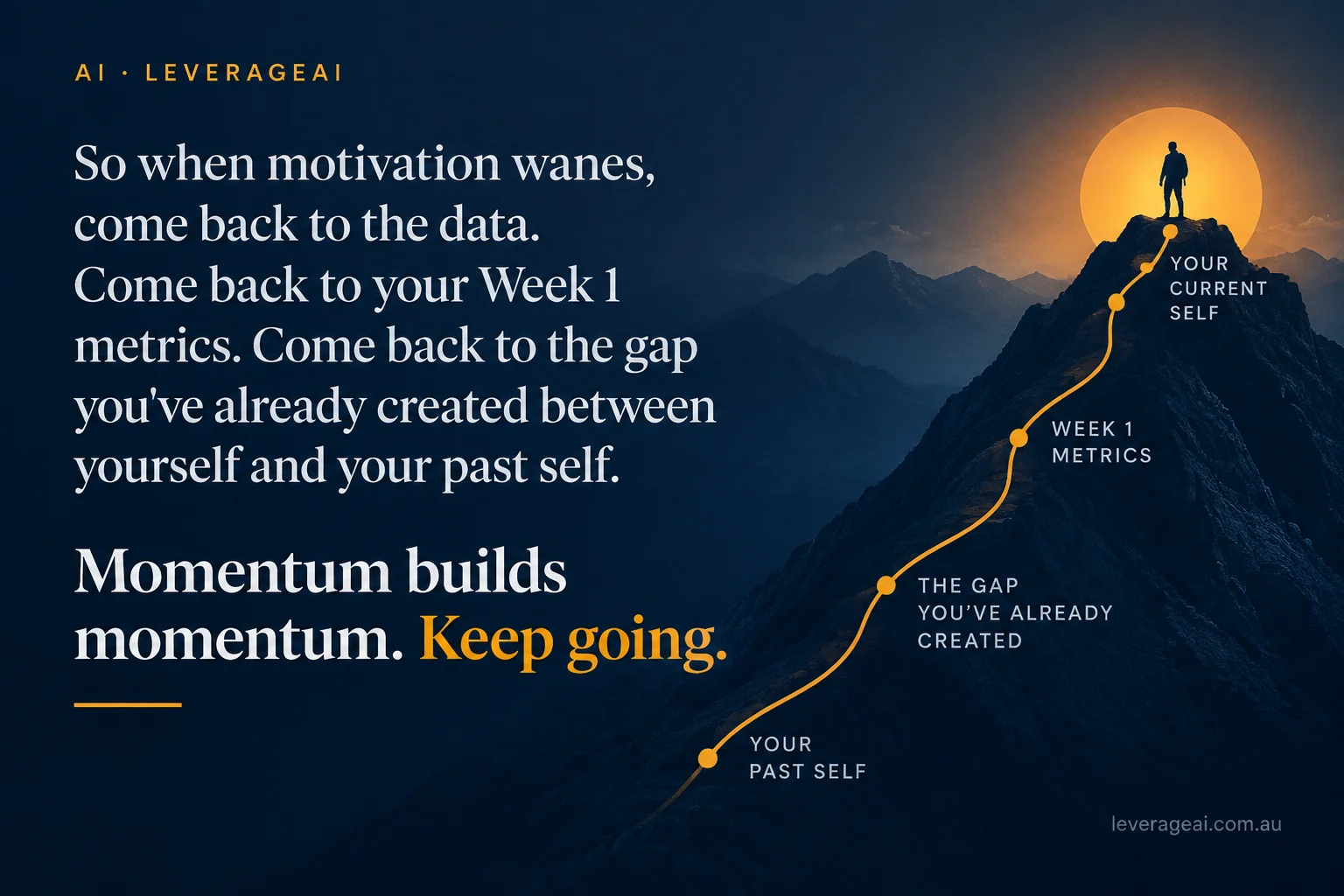
Then when motivation sags, stop asking "do I feel like this is working?" Go back to the data. Come back to your week one numbers and look at the gap between you now and you then. If idea-to-draft has gone from three hours to forty minutes, "I'm not improving" is just a mood.
This is the part people miss. Motivation doesn't create momentum. Visible evidence does. Seeing the gap gets you back to the practice, the practice widens the gap, and the loop feeds itself.
It cuts the other way too. If you've been at it for months and the numbers haven't moved, you're not compounding anything. You're using a very good tool to stay roughly where you were. That's worth knowing early, and fixing.
Either way, no baseline means you're running on vibes.
What would your week one numbers have been?
Discover more from Leverage AI for your business
Subscribe to get the latest posts sent to your email.