Commercial ambiguity is often mistaken for sophistication.
“We tailor everything” sounds client-centric. But it can also mean the offer still lives in a partner’s head, scope emerges through unpaid discovery, and the buyer cannot understand the real commitment until they are already inside it.
AI can make that model faster and more profitable. It can analyse inputs, draft proposals and reduce delivery effort.
But better economics for bespoke consulting do not automatically create a successor offer. They may simply preserve the old labour-priced model with better tooling.
The difficult work is not eliminating uncertainty. Serious work contains uncertainty.
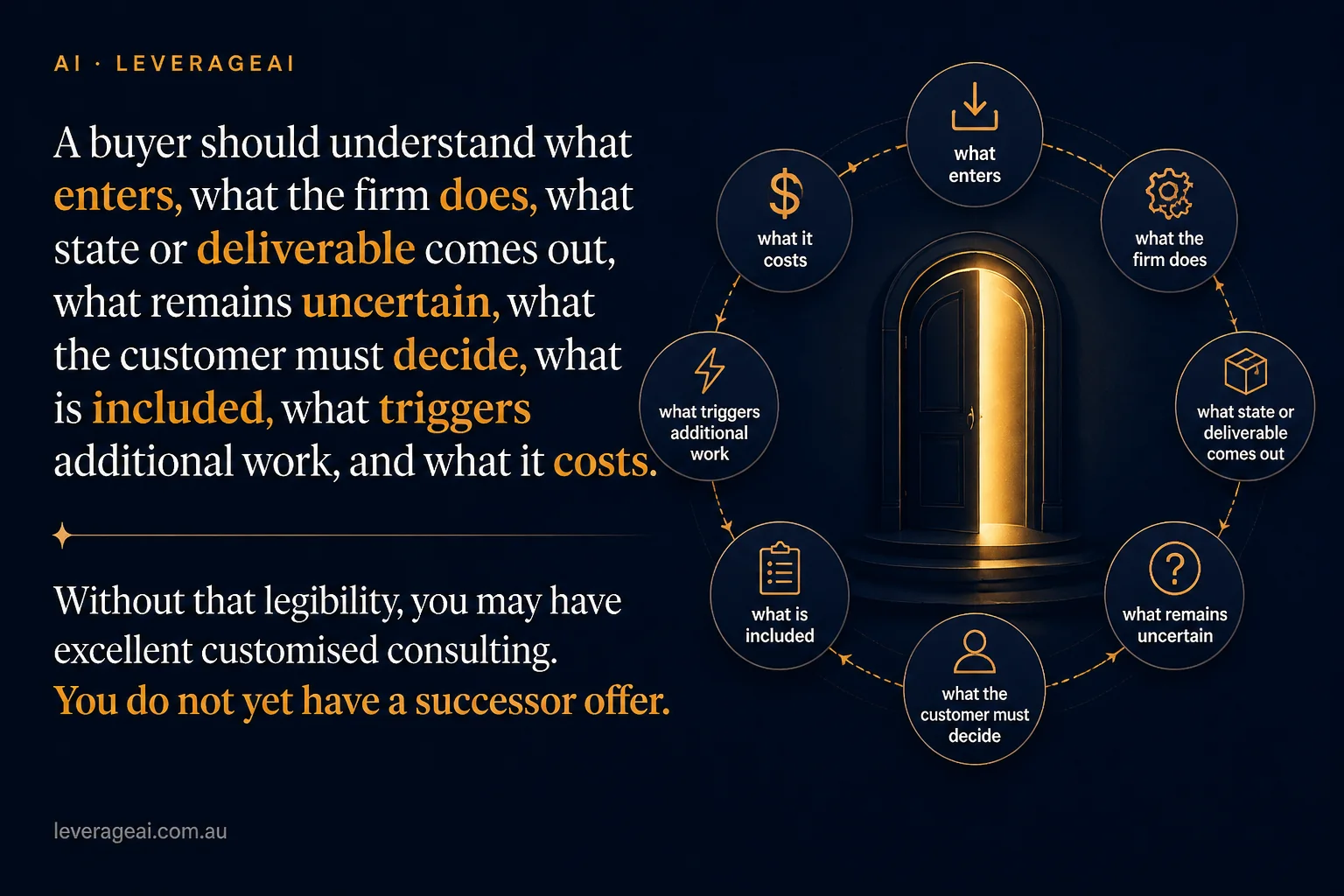
It is making uncertainty legible: naming what remains unknown, who holds each decision, where responsibility ends, and when an exception becomes additional work.
That boundary is more than packaging. It reveals whether expertise has been converted into governed delivery machinery—or still depends on senior people interpreting every engagement from scratch.
If the offer cannot be understood before the heroes arrive, it will not scale after they leave.
How much of what your firm calls “tailoring” is really uncompiled expertise?
Discover more from Leverage AI for your business
Subscribe to get the latest posts sent to your email.